Alucobond Rain-Screen Systems
Ventilated rain-screen ACP façades for Ghana — open-joint Alucobond panels on a drained, back-ventilated cavity, engineered to ASTM E283 (air), E331 (water) and E330 (wind load). The cavity keeps the wall dry and cooler in tropical humidity. Alucobond Ghana, since 1977.
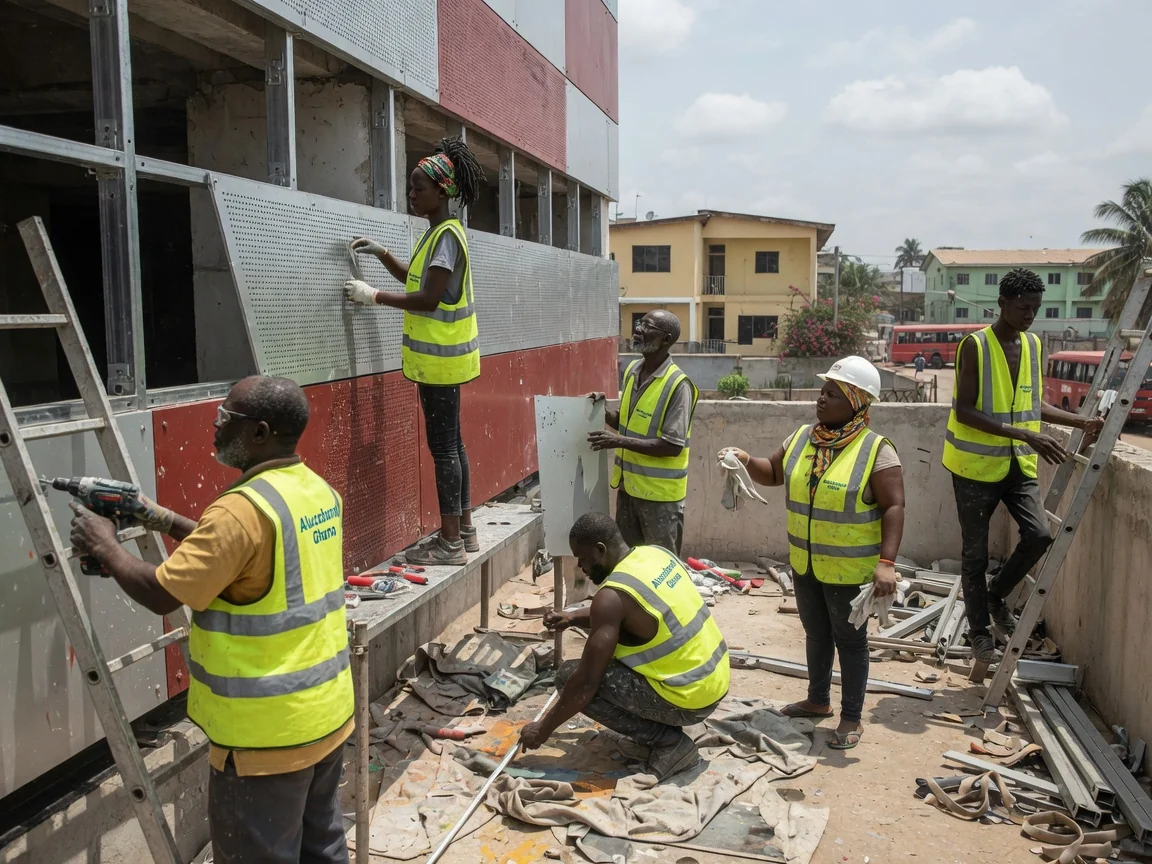
A rain-screen façade is an aluminium-composite panel skin held off the wall on a sub-frame, leaving a drained, back-ventilated cavity behind it. The panels shed most of the rain; anything that gets past the open joints drains down the cavity, and air moving up that gap keeps the wall dry. Alucobond Ghana has engineered and installed ventilated ACP rain-screens across Ghana since 1977 — and in this climate the cavity is the point, not an afterthought.
Why a Ventilated Cavity Wins in the Tropics
A sealed cladding skin tries to stop every drop of water at the panel face. A rain-screen accepts that some water gets past the joints and manages it in the cavity instead — which is more forgiving and keeps the structure drier over the life of the building. In Ghana’s heat and humidity the back-ventilated cavity does more: air moving behind the panels dries the wall, reduces trapped moisture, and shades the structure so the building runs cooler. On a sun-exposed elevation in Accra or Tema that ventilation is a real performance benefit.
Choosing the Rain-Screen System
The drained, back-ventilated cavity
The continuous gap behind the panels is what makes it a rain-screen. It is set out by the sub-frame and kept open top and bottom so water drains and air moves — the single most important detail in the system.
Open-joint ACP panels
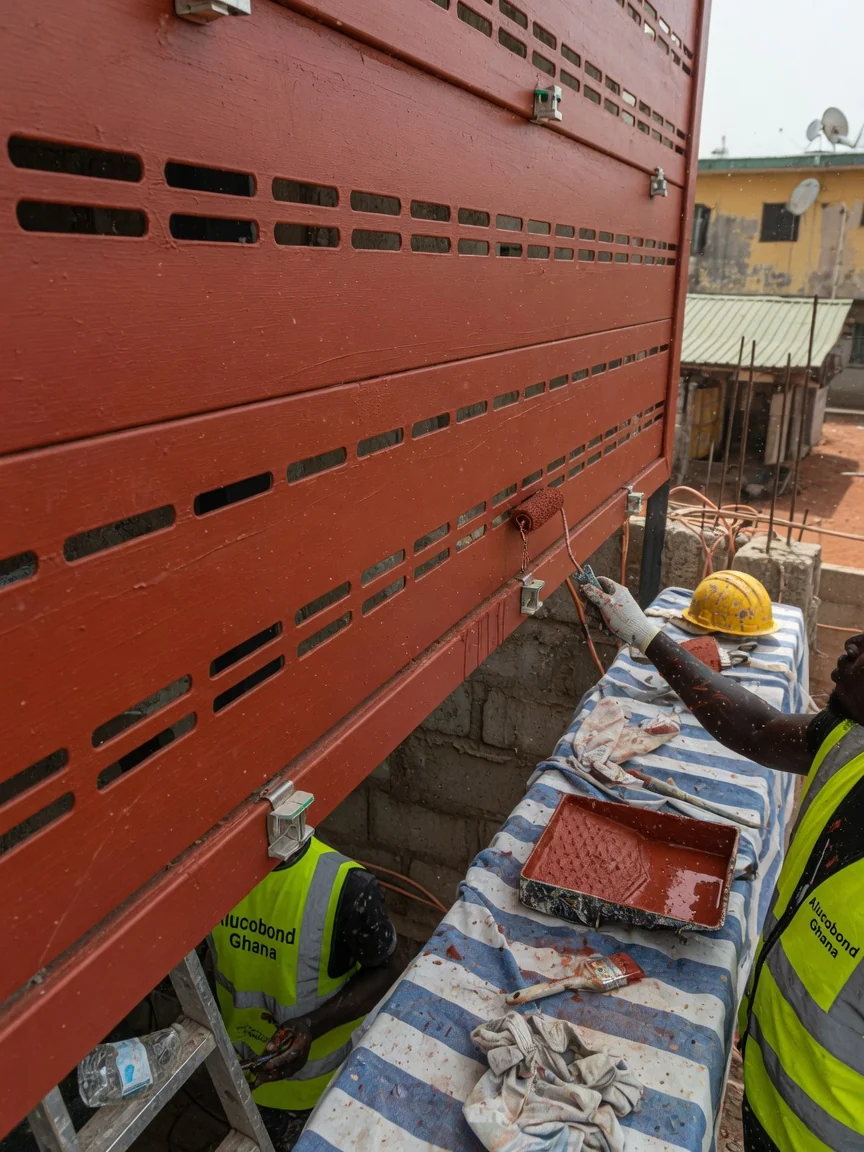
Panels are open-jointed so the cavity stays ventilated; router-cut and folded ACP trays are hung to a true joint grid. Thickness (3–6mm) and coating (PVDF/PE/FEVE) are specified to span and exposure.
Sub-frame and fixings
An aluminium sub-frame — brackets and rails — is fixed back to the structure, set out to hold the cavity and carry wind load. Bracket type and rail spacing are engineered to the wind-load target and executed to EN 1090.
Rain-Screen vs Sealed Cladding
| Feature | Ventilated rain-screen | Sealed cladding |
|---|---|---|
| Water strategy | Drained cavity manages water | Panel face stops all water |
| Joints | Open-joint (ventilated) | Sealed |
| Cavity | Drained + back-ventilated | None / minimal |
| Tropical benefit | Drier wall, cooler structure | Relies fully on sealant |
| Performance | ASTM E283/E331/E330 | ASTM E283/E331/E330 |
(Both are valid systems; the rain-screen suits exposed, humid, sun-loaded elevations. We specify to the building.)
How We Build a Rain-Screen Façade
- Survey & set the performance target — air/water/wind-load targets (ASTM E283/E331/E330), core and coating confirmed before set-out.
- Set out the sub-frame and define the cavity — aluminium brackets and rails fixed back to the structure to create a continuous drained, back-ventilated cavity.
- Detail drainage and back-ventilation — open joints and base/head ventilation openings detailed so water drains and air moves up the cavity.
- Hang the open-joint ACP panels — router-cut and folded trays hung to the approved joint grid, open-jointed to keep the cavity ventilated.
- Inspect, performance-check & hand over — cavity, drainage and fixings inspected; panel data sheets, fire classification and coating record handed over.
Materials & Real Standards
- ASTM E283 — air leakage of the façade assembly
- ASTM E331 — water penetration under static pressure (the core rain-screen performance test)
- ASTM E330 — structural performance under wind load (sets bracket and rail engineering)
- EN 1090 — execution of the aluminium sub-frame and conformity
- EN 13501-1 — reaction-to-fire classification of the panel core (A2-s1,d0 for non-combustible ACP)
- Coatings — PVDF, PE or FEVE, specified for colour retention and weathering
What Affects the Cost
- The panel core (PE vs FR vs A2 — fire-rated cores cost more, and are required on tall/occupied walls)
- Panel thickness (3–6mm), coating (PVDF/PE/FEVE), alloy and finish (anodised, RAL/Pantone)
- The sub-frame depth, bracket/rail system, cavity detailing and drainage
- Wall area, building height, wind-load target, and access
Indicative ACP material runs roughly US$2–8/m² and a loose 3mm sheet has been listed around GH₵315 — but a rain-screen façade is quoted on survey, because the sub-frame, cavity depth, wind-load engineering, height and access move the figure far more than the panel. We give the honest on-survey answer rather than a fixed install price. The full picture is on the ACP Cladding Cost Guide.
Applications Across Ghana
- Institutional and corporate façades in Airport City, Ridge, and the CBD
- Office and commercial blocks in Cantonments, East Legon, and Spintex
- Hotels, malls, and high-exposure elevations needing a drier, cooler envelope
- Industrial and corporate frontages in Tema
Areas We Serve
Alucobond Ghana engineers and installs ventilated ACP rain-screen façades across Greater Accra — Airport City, Ridge, Cantonments, the CBD, Tema, East Legon, and Spintex.
Related Services
- Commercial ACP Cladding — corporate tower façades
- Fire-Rated ACP Cladding — PE vs FR vs A2 cores explained
- Anodised Aluminium Panels — anodised façade finishes
- Retrofit & Re-Cladding — re-cladding tired or combustible façades
- ACP Cladding Cost Guide — GH₵/US$/CFA, material vs installed
Frequently Asked Questions
What is a rain-screen façade and how is it different from sealed cladding? A rain-screen is an outer ACP skin held off the wall on a sub-frame to leave a drained, back-ventilated cavity. The panels shed most of the rain; any water past the open joints drains down the cavity and air dries it. Sealed cladding instead tries to stop every drop at the panel face.
Why does a ventilated cavity help in Ghana’s climate? In tropical heat and humidity, a back-ventilated cavity lets air move behind the panels — drying the wall, reducing trapped moisture, and shading the structure so the building runs cooler. On a sun-exposed Accra or Tema elevation that ventilation is a genuine benefit.
What performance standards does a rain-screen façade meet? Performance is verified against ASTM E283 (air), ASTM E331 (water) and ASTM E330 (wind load); the aluminium sub-frame is executed to EN 1090. We set the targets at survey and specify the system to meet them.
Is a rain-screen ACP panel fire-safe? The cavity needs detailing and the core decides fire behaviour. We specify the core (FR or A2 — A2-s1,d0, limited combustibility under EN 13501-1) to the building and detail cavity fire barriers where required — see Fire-Rated ACP Cladding.