Anodised Aluminium Panel Cladding
Anodised aluminium panel cladding explained for Ghana — what the anodising finish actually is (an integral electrochemical oxide layer, not a paint), how it compares to PVDF-painted panels, the colour and grade range, and why it holds up to tropical sun, salt air and humidity. Alucobond Ghana, since 1977.
Anodised aluminium panel cladding gives a building the depth and durability of real metal — because the finish is the metal, not a paint applied to it. The Ghana market often treats “anodised” and “painted” as interchangeable; they are not. Alucobond Ghana has specified and installed aluminium façades across Ghana since 1977, and we tell you exactly what finish you are getting and why it suits your building.
Why the Anodising Finish Is Different
Most coloured aluminium cladding is painted — a PVDF, PE or FEVE coat applied to the surface. Anodising is not a coating at all: it is an electrochemical process that grows and hardens the aluminium’s own oxide layer, so the finish becomes an integral part of the metal. That single difference drives everything — it cannot peel, it keeps a genuine metallic depth, it resists abrasion and tropical UV, and its durability is set by the oxide-layer thickness rather than by a paint film. The trade-off is colour: anodising owns the metallic, bronze and champagne palette; painting owns the full RAL/Pantone range.
Choosing Anodised vs Painted
Anodised is the right answer when the building wants a true-metal, architectural look that ages well — banks, HQs, institutional and prestige commercial work, especially in coastal exposure. Painted (PVDF) is the right answer when a project needs a specific bright or non-metallic colour. We specify to the building’s exposure and intent, and we will tell you when painted is genuinely the better call rather than push a single product.
Anodised Aluminium Systems
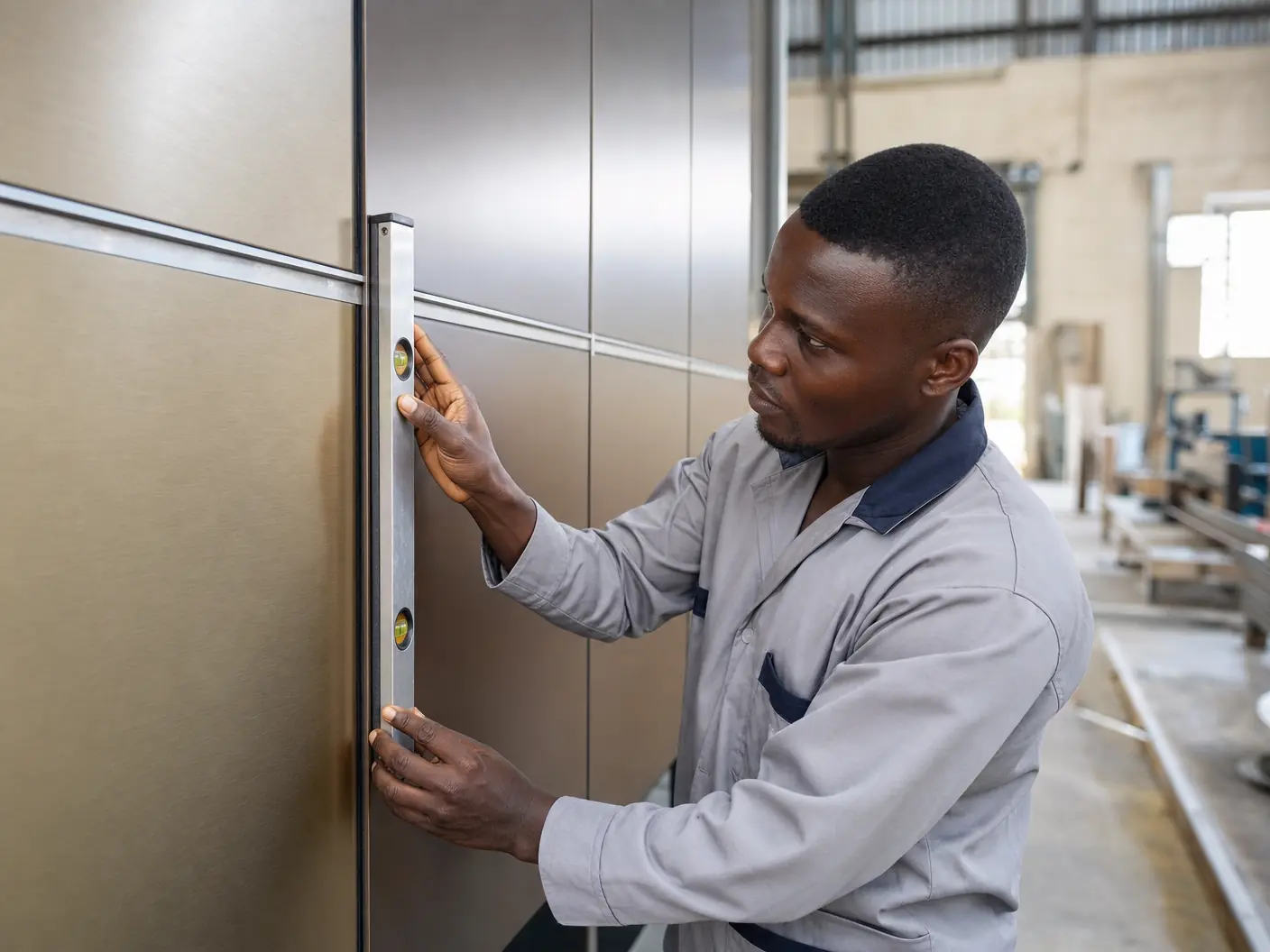
Solid Anodised Aluminium Panels
Single-skin solid aluminium sheet, anodised and formed into rainscreen cassettes or panels. The most robust option — non-combustible substrate, no composite core to consider, and the full integral durability of anodising. Specified for prestige façades where the finish must last the working life of the building.
Anodised-Skin Composite (ACM) Panels
An aluminium composite panel whose visible skin carries the anodised finish, giving the same metallic look with the flatness and lighter weight of ACM. Here the core still governs the fire behaviour — PE, FR or A2 — so the core is specified and documented separately from the finish.
Grade & Oxide-Layer Thickness
Anodising is specified by oxide-layer thickness (grade), not as a single product. Interior and sheltered work takes a lighter grade; exterior, sun-exposed and coastal façades take a thicker, more durable grade. The grade — not the colour — is what carries the weather performance.
Anodised vs Painted — Compared
| Anodised | Painted (PVDF/PE/FEVE) | |
|---|---|---|
| Nature of finish | Integral oxide layer (part of the metal) | Coating applied to the surface |
| Can it peel? | No — it is the metal | In principle, can chip/peel over time |
| Colour range | Metallic, bronze, champagne, black, grey | Full RAL / Pantone spectrum |
| Durability driver | Oxide-layer thickness (grade) | Paint chemistry (PVDF best for UV) |
| Typical use | Prestige/coastal, true-metal look | Specific bright/non-metallic colours |
(Both are valid; the right choice is set by the building’s look and exposure — which we confirm on survey.)
How We Specify & Install an Anodised Façade
- Survey and confirm the exposure — coastal salt air, sun orientation, humidity → the anodising grade.
- Specify the finish, grade and colour — substrate, oxide-layer thickness, anodised colour, written into the spec.
- Engineer the sub-frame and cavity — aluminium sub-frame, ventilated cavity, fixings, movement allowance as a system.
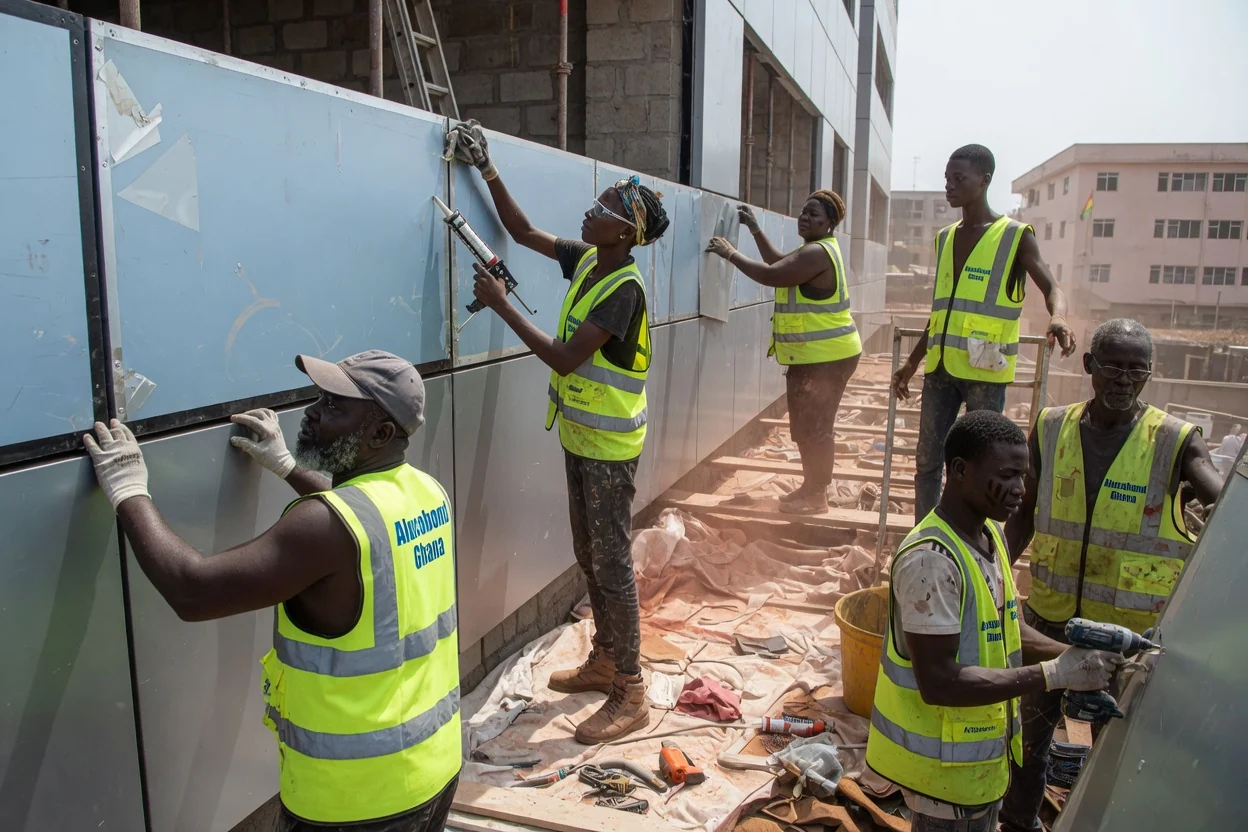
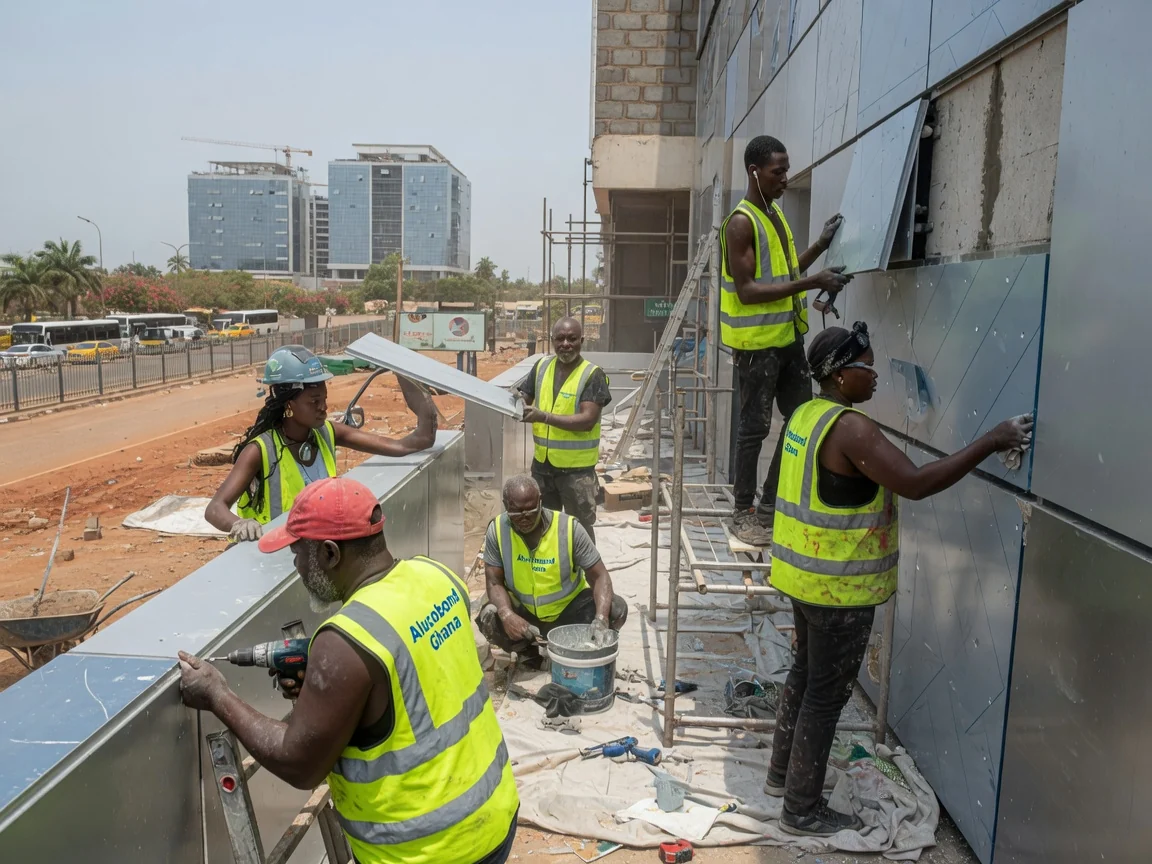
- Install, inspect and hand over the data — install to detail, inspect under raking light, hand over the finish specification.
Materials & Real Standards
- Anodising — an electrochemical finish that thickens the aluminium’s own oxide layer; specified by oxide-layer thickness/grade rather than by a paint code. It is integral to the metal, so it does not peel, and heavier grades are specified for coastal and high-UV exposure.
- Painted alternatives — PVDF (best UV/colour retention), PE and FEVE coatings, where a specific RAL/Pantone colour is needed instead of a metallic tone.
- EN 1090 — execution of aluminium structures (-1 conformity/CE marking, -3 aluminium; Execution Classes EXC1–4) governing the fabricated sub-frame and panel system.
- Core (composite panels only) — where an anodised-skin ACM is used, the core (PE / FR / A2) governs fire behaviour and is classified to EN 13501-1; see Fire-Rated ACP Cladding.
What Affects the Cost
- Substrate — solid anodised aluminium sheet vs anodised-skin ACM
- Anodising grade (oxide-layer thickness) and colour — heavier coastal grades cost more
- The sub-frame, ventilated cavity, fixings and movement detailing
- Panel size, building height, and access
Anodised façade work is quoted on survey — the substrate, grade, height and access decide the figure. Indicative material references and the full cost picture are on the ACP Cladding Cost Guide.
Applications Across Ghana
- Bank and corporate HQ façades in Airport City, Ridge and the CBD, where a true-metal bronze/champagne look is specified
- Institutional and prestige commercial buildings wanting a finish that lasts the building’s life
- Coastal-exposure towers (seafront Accra and Tema) where corrosion resistance is the priority
- Re-cladding façades to upgrade from a tired painted finish to integral anodising
Areas We Serve
Alucobond Ghana specifies and installs anodised aluminium façades across Greater Accra — Airport City, Ridge, Cantonments, the CBD, Tema, East Legon, and Spintex.
Related Services
- Commercial ACP Cladding — corporate tower façades
- Rain-Screen Systems — ventilated ACP façades
- Fire-Rated ACP Cladding — PE vs FR vs A2 cores
- ACP Cladding Cost Guide — GH₵/US$/CFA, material vs installed
Frequently Asked Questions
What is anodised aluminium, and how is it different from painted aluminium? Anodising is an electrochemical process that thickens and hardens the aluminium’s own oxide layer, so the finish is part of the metal rather than a coating on top. A painted panel (PVDF/PE/FEVE) is a colour layer on the surface that can in principle chip or peel. Anodising cannot peel and keeps a true metallic depth; the trade-off is a metallic/bronze/champagne palette rather than the full RAL/Pantone range.
Does anodised aluminium hold up to Ghana’s climate? Yes — the integral oxide layer is hard, abrasion-resistant, does not chalk or fade like some painted finishes under intense UV, and resists salt-air corrosion. For coastal exposure we specify a thicker anodising grade, because oxide-layer thickness carries the durability.
Can I get any colour in anodised aluminium? Not the full paint spectrum. Anodising excels at clear/silver and metallic tones — bronze, champagne, gold, black, grey — the palette most banks and HQs want. For a specific bright RAL/Pantone colour, a PVDF-painted panel is the right answer, and we will say so.
Is anodised aluminium fire-safe? The anodised finish is on non-combustible aluminium, but on a composite panel the fire behaviour is decided by the core, not the finish. A solid aluminium sheet largely sidesteps the question; an anodised-skin ACM still has a PE/FR/A2 core that governs the fire class. We specify and document the core — see our fire-rated ACP guide.