Alucobond Commercial Cladding
Corporate and commercial ACP/ACM tower cladding for Ghana — Alucobond aluminium-composite panels specified, fabricated (router-cut and folded) and installed for Airport City, Ridge and CBD façades. Real coatings (PVDF/PE/FEVE), real alloys, real fire-core disclosure. Alucobond Ghana, since 1977.
Commercial ACP cladding is the aluminium-composite panel skin on a corporate or commercial building — the elevation people read from the street. An aluminium composite panel (ACP/ACM) is two thin aluminium skins bonded either side of a core, fabricated into trays and hung on an engineered sub-frame. Alucobond Ghana has specified, fabricated and installed these façades for commercial buildings across Ghana since 1977, and our discipline is simple: the specification drives the panel, and what goes on the tower is documented in writing.
Why Commercial Cladding Is a Specification Decision
On a corporate tower the façade is on view for the working life of the building, exposed to sun, harmattan dust and tropical rain, and — on a tall or occupied building — it is a life-safety element. That makes it a specification decision, not a finish or a price decision. The panel thickness, the coating, the alloy, the core and the sub-frame all have to be specified to the building. The risk in this market is being quoted “ACP” with none of those named, then being given a thin sheet, a cheap coating and an undisclosed combustible core.
Choosing the Commercial ACP System
Panel thickness (3–6mm)
Commercial elevations are usually 4mm ACP — the standard sheet is 1220×2440mm and thicknesses run 3–6mm. Thicker panels stay flatter over large bays and read better on a tall elevation; we specify thickness to span and exposure.
Coating — PVDF / PE / FEVE
The coating decides colour retention and weathering. PVDF is the commercial default for tall, sun-exposed towers; PE is a lower-cost coating for less demanding work; FEVE is a high-durability option. Anodised and RAL/Pantone finishes are available.
Core — and disclosing it
The core (PE, FR or A2) decides fire behaviour. On a commercial tower this matters, and we name the core and its EN 13501-1 class in the spec rather than leaving it unstated. The full core comparison is on our Fire-Rated ACP Cladding page.
Commercial ACP Options Compared
| System detail | Option | Best for | Note |
|---|---|---|---|
| Thickness | 3mm / 4mm / 6mm | 4mm = commercial default | thicker = flatter on large bays |
| Coating | PVDF / PE / FEVE | PVDF for towers | PVDF best colour/weather retention |
| Joint | Sealed / open-joint | sealed = sleek; open = ventilated | open-joint reads as a rain-screen |
| Core | FR / A2 | A2 for tall/occupied | A2-s1,d0 per EN 13501-1 |
(Final spec is per the project and the architect’s requirement; we write thickness, coating, alloy and core into the documentation.)
How We Deliver a Commercial Façade
- Survey & read the specification — building, elevations, thickness, coating, alloy and the reaction-to-fire requirement confirmed before ordering.
- Specify the panel and disclose the core — PE/FR/A2 + EN 13501-1 class + thickness + coating written into the spec.
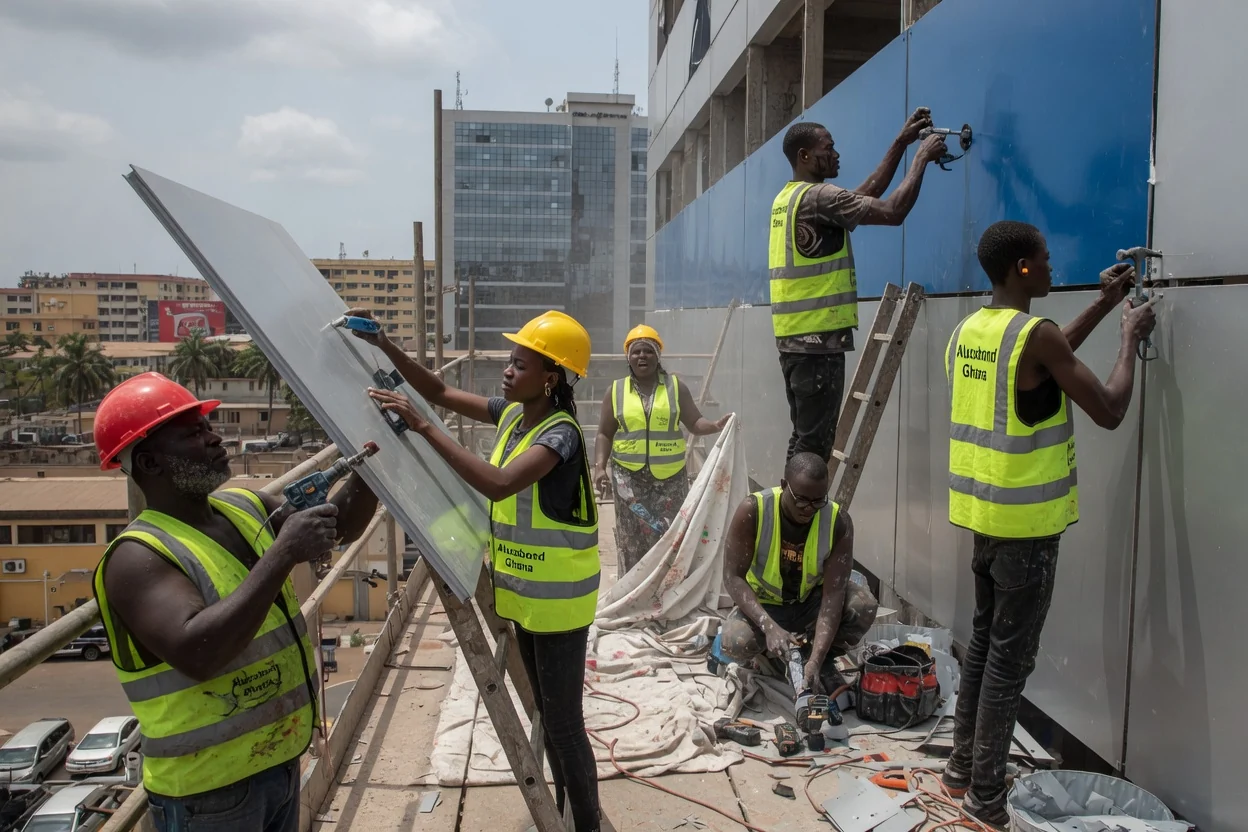
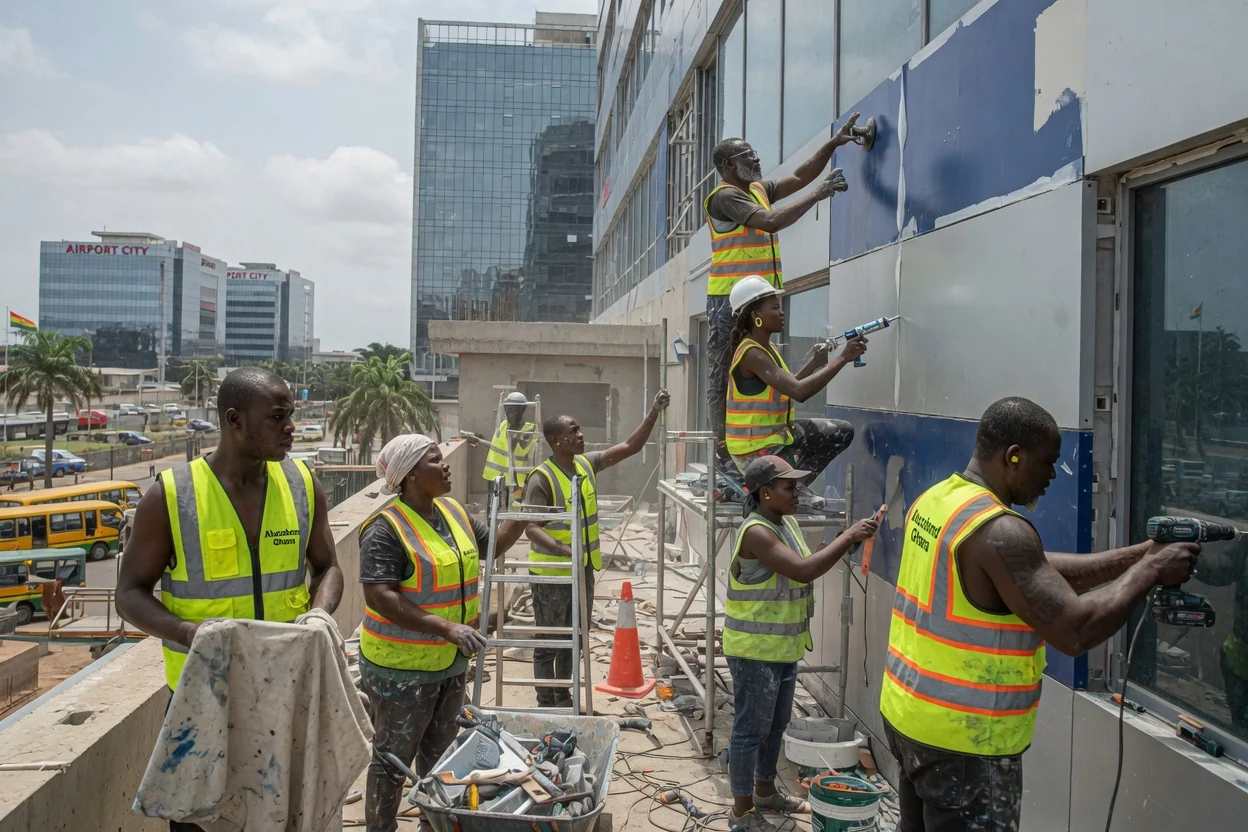
- Fabricate — router-cut and folded — panels grooved and folded into trays/cassettes to tight tolerances in the workshop.
- Engineer the sub-frame and install — aluminium sub-frame set out, levelled and fixed; panels hung to the approved detail; elevation aligned.
- Inspect & hand over the paper trail — panel data sheets, fire classification and coating record handed to the owner.
Materials & Real Standards
- EN 13501-1 — reaction-to-fire classification of the panel (Euroclass; A2-s1,d0 is the target for non-combustible ACP on tall/occupied towers)
- ASTM E283 — air leakage of the façade assembly
- ASTM E331 — water penetration under static pressure
- ASTM E330 — structural performance under wind load
- EN 1090 — execution of aluminium structural work (sub-frame fabrication and conformity)
- Coatings — PVDF, PE or FEVE, specified for colour retention and weathering on exposed elevations
What Affects the Cost
- The panel core (PE vs FR vs A2 — the fire-rated cores cost more, and are required on tall/occupied towers)
- Panel thickness (3–6mm), coating (PVDF/PE/FEVE), alloy and finish (anodised, RAL/Pantone)
- The sub-frame, fabrication (router-cut/folded trays), fixings and any open-joint detailing
- Building height, elevation area, and access (scaffold, mast climber, or rope access)
Indicative ACP material runs roughly US$2–8/m² and a loose 3mm sheet has been listed around GH₵315 — but a finished commercial façade is genuinely quoted on survey, because height, access, sub-frame and panel grade move the figure far more than the panel itself. We give the honest on-survey answer rather than a fixed install price that would not hold. The full picture is on the ACP Cladding Cost Guide.
Applications Across Ghana
- Corporate HQ and bank towers in Airport City, Ridge, and the CBD
- Commercial and office blocks in Cantonments, East Legon, and Spintex
- Hotels, malls, and mixed-use commercial buildings
- Industrial and corporate frontages in Tema
Areas We Serve
Alucobond Ghana specifies, fabricates and installs commercial ACP cladding across Greater Accra — Airport City, Ridge, Cantonments, the CBD, Tema, East Legon, and Spintex.
Related Services
- Fire-Rated ACP Cladding — PE vs FR vs A2 cores explained
- Rain-Screen Systems — ventilated ACP façades
- Signage & Wayfinding — branded ACP signage
- Retrofit & Re-Cladding — replacing tired or combustible panels
- ACP Cladding Cost Guide — GH₵/US$/CFA, material vs installed
Frequently Asked Questions
What does commercial ACP cladding actually cost in Ghana? The panel material is the smaller part — indicative ACP material runs roughly US$2–8/m² (a loose 3mm sheet has been listed around GH₵315) — but a finished commercial façade is quoted on survey, because the sub-frame, fabrication, fixings, height and access decide the figure. We give an honest on-survey price. The full picture is on the ACP Cladding Cost Guide.
Is the cladding on my tower fire-safe? It depends on the panel core, not the brand name. A combustible PE core is not appropriate for a tall, occupied building; an FR or A2 (A2-s1,d0, limited combustibility under EN 13501-1) core is. We disclose the core in the spec — see Fire-Rated ACP Cladding.
How are the panels fabricated and fixed? Panels are router-grooved and folded into trays/cassettes in the workshop, then hung on an engineered aluminium sub-frame fixed back to the structure, sealed-joint or open-joint, with the elevation set out so the joint grid reads true.
What thickness and coating do you use on commercial work? Typically 4mm ACP (3–6mm available) with a PVDF coating for colour retention on tall exposed elevations; PE and FEVE are also available. We specify thickness, alloy and coating to the building and write them into the documentation.