Alucobond Retrofit Re-Cladding
Re-cladding and façade refurbishment in Ghana: replacing combustible PE-core cladding with non-combustible A2/FR panels, surveying existing façades, and working safely on occupied buildings. Alucobond Ghana, since 1977.
Re-cladding is the work of taking an existing façade off a building and putting a better one back — and in this market the reason is increasingly fire safety. Many buildings across Ghana were clad with combustible PE-core aluminium composite panels — the material involved in the Grenfell Tower fire — and the owners were never told what was on the wall. Alucobond Ghana has specified and installed aluminium-composite façades since 1977, and we re-clad existing buildings the same way we specify new ones: we identify what is there, we name the replacement, and we hand over the evidence.
Why Re-Clad — And Why the Core Is the Whole Question
A façade gets re-clad for weathering, for appearance, or because the building is being repositioned — but the decision that matters most is what core is on the wall today. Two façades can look identical and behave completely differently in a fire, because the hidden core is the only thing that changes. If the survey finds a combustible PE core on a tall or occupied building, re-cladding stops being cosmetic and becomes a duty-of-care decision. We treat the survey finding — not the finish — as the thing that drives the scope.
Choosing the Replacement System
The replacement is specified to the building, not to the lowest price. For tall or occupied buildings the target is normally a non-combustible A2-s1,d0 core to EN 13501-1; an FR (fire-retardant) core may be permitted on lower-risk buildings. The core, its Euroclass and the coating are written into the specification so that what is re-installed is what was approved — never a cheaper unnamed substitute. How PE, FR and A2 cores differ is set out on our Fire-Rated ACP Cladding page.
What Re-Cladding & Façade Refurbishment Covers
Survey & Core Identification
We survey the existing cladding, sub-frame, cavity and fixings and identify what core is on the wall — combustible PE, fire-retardant FR, or non-combustible A2. We do not assume the original installer disclosed it; the finding is given to the owner in writing and drives the remediation scope.
Removing Combustible PE Panels
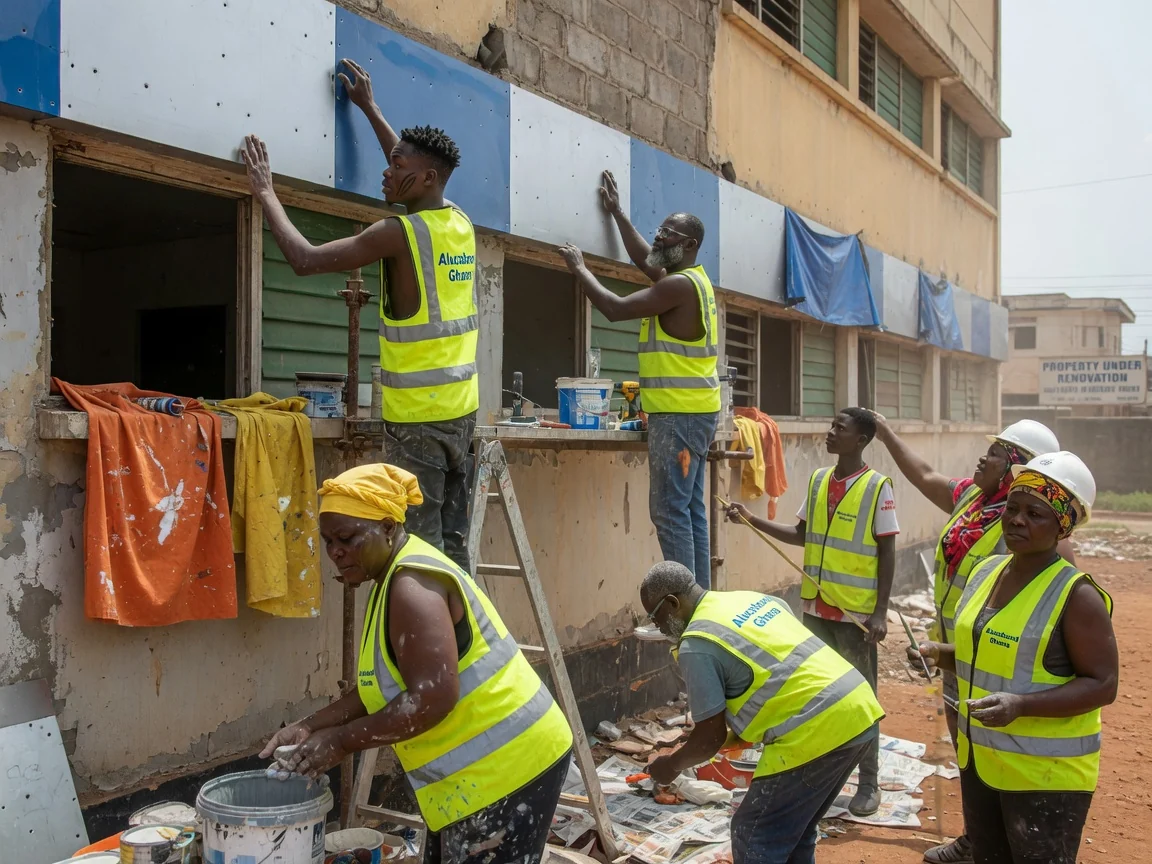
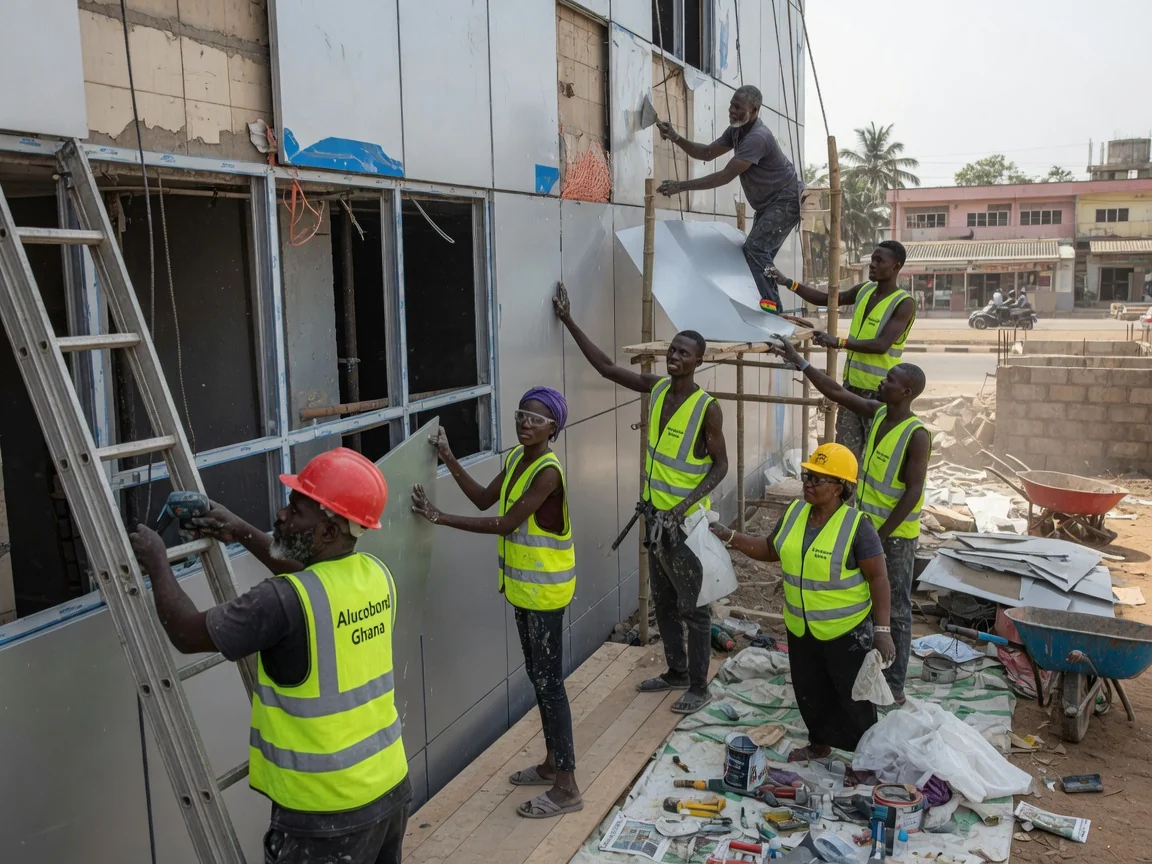
Where the survey finds combustible PE-core cladding on a tall or occupied building, removal is planned with fire precautions for the period the façade is open. Panels are taken down in a controlled sequence with public protection in place, not stripped en masse without a plan.
Re-Cladding to FR / A2
The replacement is installed to a real EN 13501-1 class — typically A2-s1,d0 for tall or occupied buildings, FR where a B-class reaction-to-fire is permitted. The new panel system is fixed to the approved detail, with cavity fire barriers and fixings engineered as a system rather than a panel hung on an unchecked cavity.
Façade Refurbishment
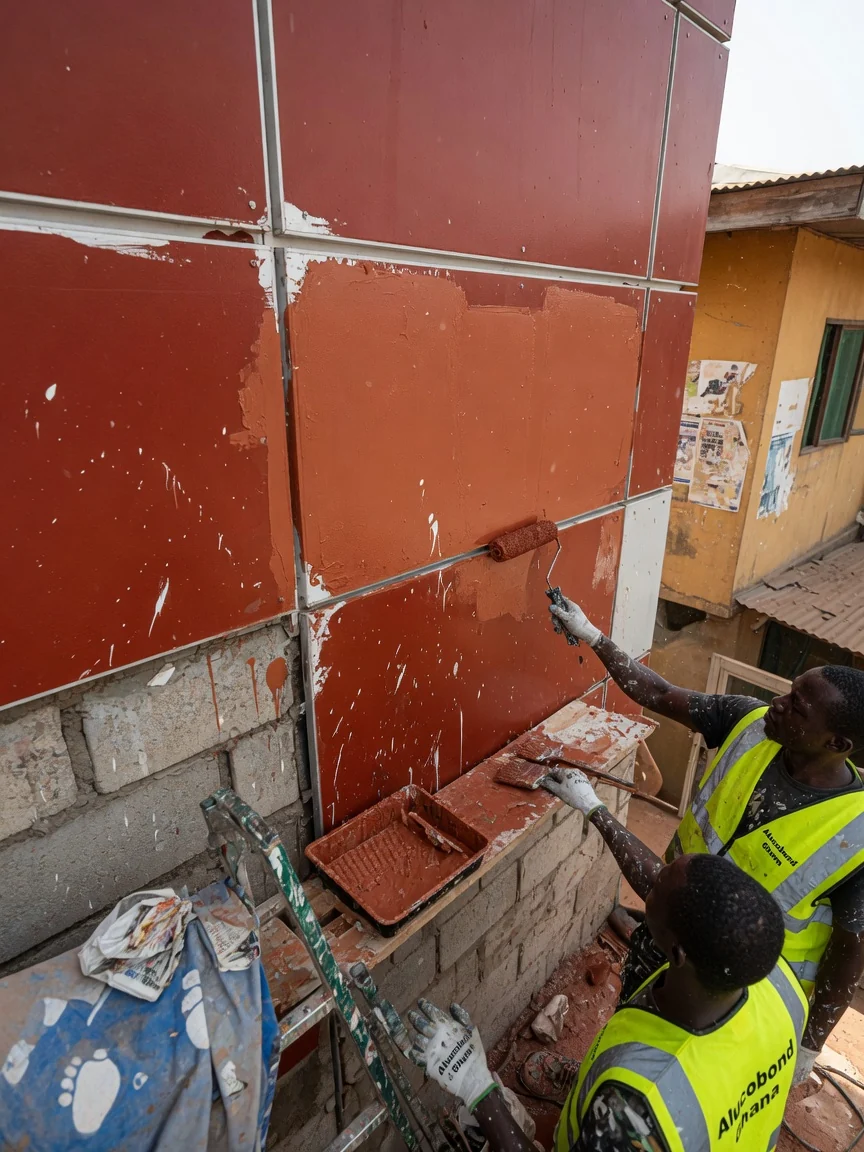
Where the existing sub-frame is sound, refurbishment can renew the panel skin, coating and weather-tightness without a full strip-out — bringing a tired or weathered façade back to specification. The scope follows the survey: what is sound is kept, what is not is replaced.
Occupied-Building Works
Most re-cladding is on buildings that keep operating — banks, hospitals, hotels and offices that cannot close. Access (scaffold or mast climber), sequencing, public protection and fire precautions are planned so the building keeps running while the combustible cladding is replaced.
New-Build vs Re-Clad — What Changes
| Aspect | New-build cladding | Retrofit re-cladding |
|---|---|---|
| Starting point | Bare structure | Existing façade, often unknown core |
| First decision | Specify the core | Survey & identify the existing core |
| Driving issue | Design & performance | Fire safety — is the existing core combustible? |
| Building status | Usually empty / under construction | Often occupied & operating |
| Sub-frame | New, designed for the panel | May be reused if survey confirms it is sound |
(The actual scope is per survey — what is sound is kept, what is combustible or failed is replaced.)
How We Re-Clad an Existing Façade
- Survey the façade & identify the existing core — cladding, sub-frame, cavity and fixings assessed; PE/FR/A2 core identified in writing.
- Specify the replacement to a real fire class — EN 13501-1 class (typically A2-s1,d0), core, Euroclass and coating written into the spec.
- Plan removal, access & occupied-building safety — controlled panel removal, access, public protection and fire precautions while the façade is open.
- Re-clad, inspect & hand over the evidence — new non-combustible system installed to detail; cavity barriers and fixings inspected; panel data sheets and fire classification handed over.
Materials & Real Standards
- PE / FR / A2 cores — the existing core is identified on survey; the replacement is specified to a real EN 13501-1 class (A2-s1,d0 for tall/occupied buildings, FR where a B-class is permitted)
- EN 13501-1 — European reaction-to-fire classification (Euroclass; A2-s1,d0 is the target for non-combustible ACP)
- EN 1090 — execution of aluminium and steel structures (the sub-frame and support steel work), with its Execution Classes
- Coatings — PVDF, PE or FEVE finish on the replacement panel, specified for weathering and colour retention (separate from the fire question)
What Affects the Cost
- What the survey finds — whether the sub-frame is sound and reusable, or the cavity barriers and fixings also need addressing
- The replacement core specified (FR vs A2 — the fire-rated cores cost more, and are worth it where required)
- Removal and disposal of the existing combustible panels
- Access and sequencing on an occupied building, building height, and the period the façade must stay open
Re-cladding is quoted on survey — until we know what core is on the wall and whether the sub-frame is sound, an honest figure is not possible. Indicative material references and the full cost picture are on the ACP Cladding Cost Guide.
Applications Across Ghana
- Banks and corporate HQ towers re-clad from combustible PE to non-combustible A2 (Airport City, Ridge, the CBD)
- Hospitals and healthcare buildings where A2 non-combustibility is now specified (Tema, Accra)
- Hotels, malls and high-occupancy buildings re-clad while staying open
- Weathered commercial façades refurbished to specification in Spintex, East Legon and Tema
Areas We Serve
Alucobond Ghana surveys and re-clads existing façades across Greater Accra — Airport City, Ridge, Cantonments, the CBD, Tema, East Legon, Spintex, and Osu.
Related Services
- Fire-Rated ACP Cladding — PE vs FR vs A2 cores explained
- ACP Cladding Cost Guide — GH₵/US$/CFA, material vs installed
- Commercial ACP Cladding — corporate tower façades
- Rain-Screen Systems — ventilated ACP façades
Frequently Asked Questions
How do I know if my building has combustible cladding? You cannot tell by looking — two façades can be visually identical and behave completely differently in a fire, because only the hidden core changes. A PE core is combustible (the Grenfell material); an A2 core is classified A2-s1,d0 (limited combustibility) under EN 13501-1. The only reliable answer is a survey that identifies the core, which we give you in writing.
Do you have to strip the whole façade to re-clad? Not always. The right scope depends on the survey — sometimes only the combustible panels are removed while a sound sub-frame is reused; sometimes the cavity barriers and fixings also need addressing. We scope to what the survey finds, not to a one-size-fits-all strip-out.
Can you re-clad an occupied building? Yes. Most of our re-cladding is on buildings that keep operating — banks, hospitals, hotels and offices. We plan access, sequencing, public protection and fire precautions for the period the façade is open, so the building keeps running while combustible cladding is replaced.
What fire class should the replacement panel be? For tall or occupied buildings the target is normally A2-s1,d0 to EN 13501-1 — the highest rating an ACP achieves. An FR core may be permitted on lower-risk buildings where a B-class is acceptable. We specify the replacement to the building, name the core and Euroclass in the spec, and hand over the classification at completion.