Alucobond Canopy & Soffit Systems
ACP canopies, soffits, entrance features and clad undersides in Ghana — weatherproof, ventilated and clean-lined. Aluminium composite panel soffits that shed rain, hide services and frame an entrance, specified to a real coating (PVDF/PE/FEVE) and executed to EN 1090. Alucobond Ghana, since 1977.
A canopy and a soffit are the parts of a building you stand under and look up at — the entrance feature, the underside of a balcony, the line beneath a roof overhang. Done in aluminium composite panel (ACP/ACM), they shed rain, hide the services behind them, and hold a clean continuous line. Alucobond Ghana has fabricated and installed aluminium-composite façades, canopies and soffits across Ghana since 1977.
Why ACP Is the Right Material for Undersides
The underside of a building is the unforgiving place: it catches splash and humidity, it is in permanent shade so it shows every stain, and it is awkward to reach for repainting. ACP suits it precisely — the aluminium skins do not rust or rot, the factory coating holds its colour without maintenance, and the panel stays dead flat across a span so the soffit reads as one crisp surface. Plasterboard stains and sags in that position; timber warps; ACP simply stays clean.
Choosing the Right Canopy & Soffit Build
The build is decided by three things: how the rainwater sheds (the canopy needs falls and drips), whether the void behind needs to ventilate (heat and moisture relief), and what services sit behind the line (ducts, conduit, downpipes, lighting). We confirm all three on survey, because an underside that looks flat but traps water or heat is a failure — the clean line has to perform as well as it reads.
ACP Canopy & Soffit Systems
Entrance Canopies & Feature Awnings
Cantilevered or supported ACP canopies over entrances and drop-offs — the first thing a visitor walks under, detailed to shed rain away from the door and to frame the entrance as a brand feature.
Building Soffits & Roof Overhangs
Continuous ACP soffit lining to the underside of roof overhangs, eaves and balconies — flat, jointed and aligned across the span, concealing structure and services behind a clean face.
Ventilated Soffits
Soffits with detailed ventilation gaps or perforated ACP where the roof or balcony void must breathe — sealed against driven rain while allowing the heat and moisture relief the build-up needs.
Underside & Service-Concealment Cladding
ACP cladding to the underside of canopies, walkways, drive-throughs and undercrofts — hiding ductwork, conduit, downpipes and lighting behind a continuous surface with access panels and integrated downlights where required.
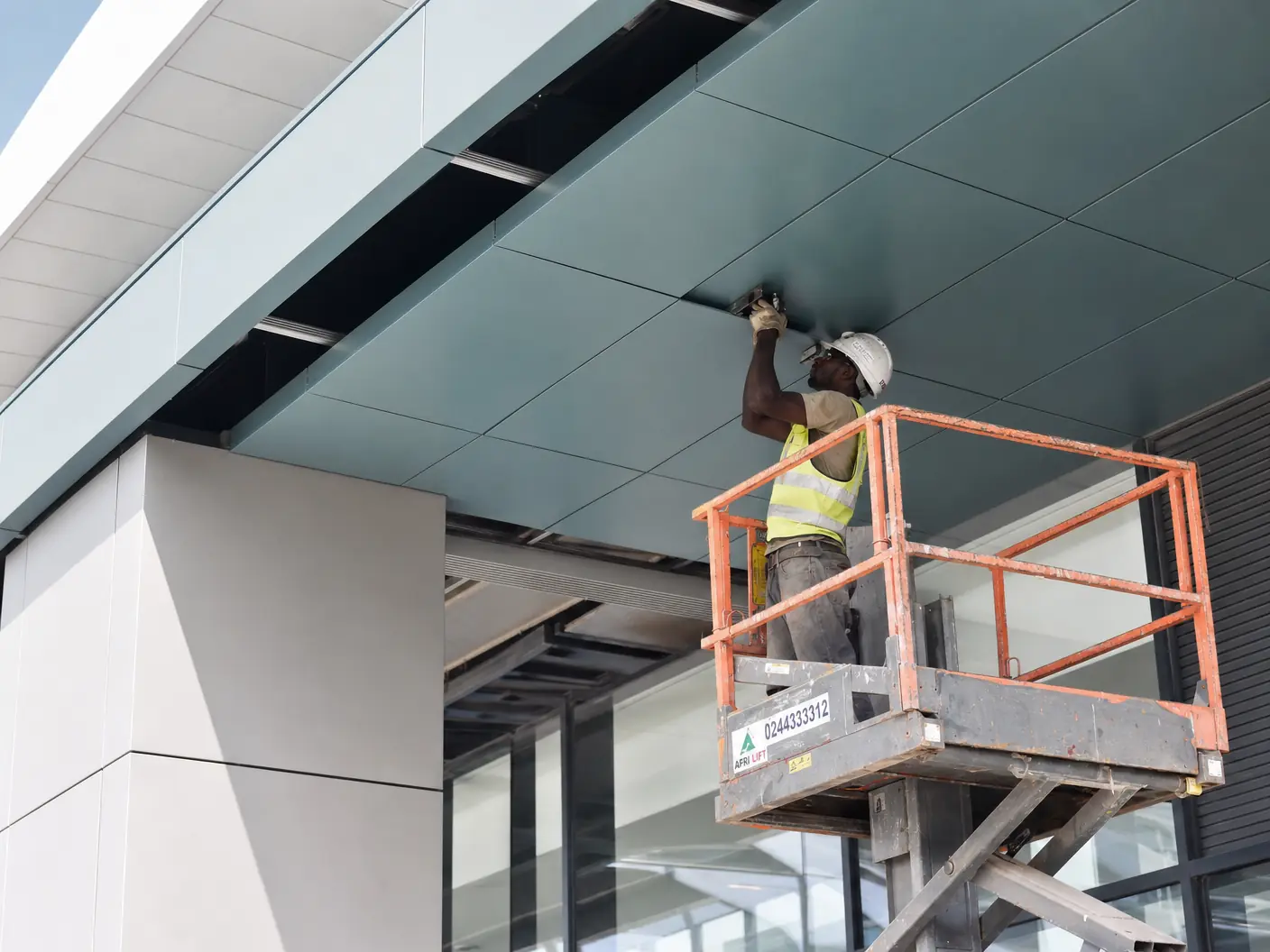
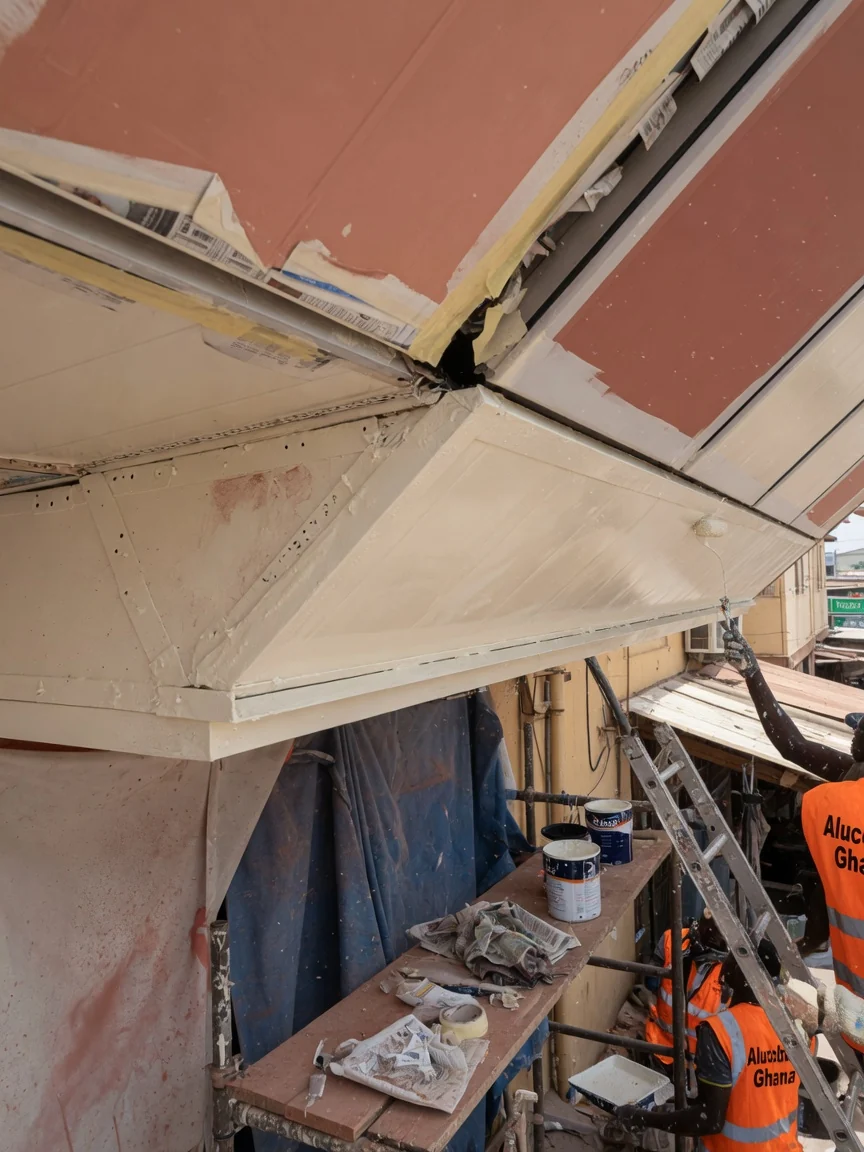
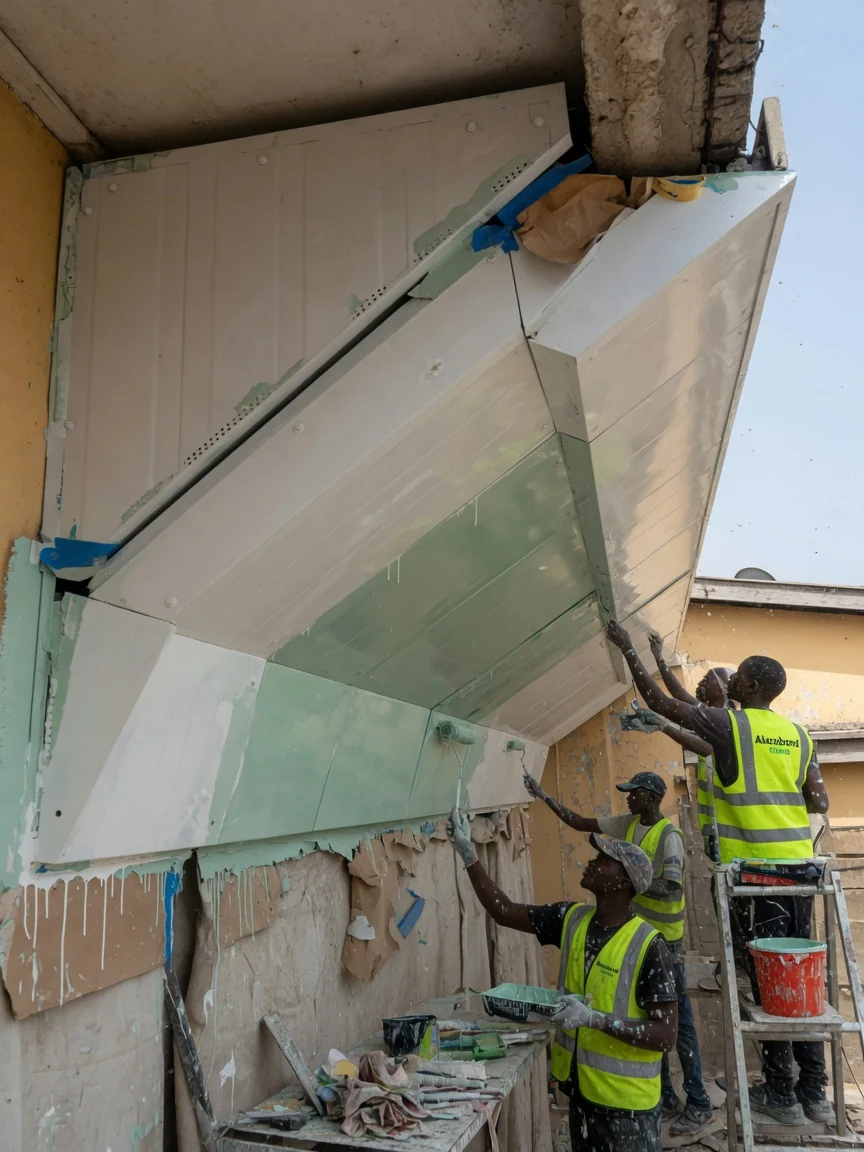
Canopy & Soffit Systems Compared
| System | Where it sits | Key requirement | Finish |
|---|---|---|---|
| Entrance canopy | Over doors and drop-offs | Sheds rain, frames entrance | PVDF/PE coated ACP |
| Building soffit | Roof overhang, eave, balcony | Flat line, concealed structure | PVDF/PE coated ACP |
| Ventilated soffit | Roof/balcony void | Air movement + rain protection | Perforated / gapped ACP |
| Underside / service-concealment | Walkways, undercrofts, drive-throughs | Hides ducts, conduit, lighting | PVDF/PE coated ACP |
(Coating, falls and ventilation are confirmed in writing per project; the panel core is matched to the exposure.)
How We Build an ACP Canopy & Soffit
- Survey the entrance and the underside — measure the canopy/soffit, check the structure, note where water sheds and where services run.
- Specify the panel, falls and ventilation — ACP core + coating (PVDF/PE/FEVE) + drainage falls + ventilation gaps written into the spec.
- Fabricate the panels and sub-frame — cut, fold and edge-finish panels, prepare the aluminium sub-frame for a dead-flat, well-drained line.
- Install, weatherproof and hand over — fix to the frame, detail upstands and drips, leave ventilation working, hand over the panel data sheet and coating reference.
Materials & Real Standards
- ACP/ACM panel — two aluminium skins bonded to a core; PE, FR or A2 core specified to the application (where the soffit is part of a fire-rated façade, see Fire-Rated ACP)
- Coatings — PVDF for the longest colour retention on a shaded, exposed underside, or PE/FEVE depending on exposure and budget
- Ventilation — gapped or perforated ACP detailed where the roof or balcony void must breathe
- EN 1090 — aluminium execution standard governing the fabrication and assembly of the sub-frame and panels
- EN 13501-1 — reaction-to-fire classification, relevant where the canopy or soffit forms part of a façade on an occupied building
What Affects the Cost
- Canopy or soffit area, span, and the structure it fixes back to
- Whether the canopy is cantilevered or supported (cantilever needs more sub-frame engineering)
- Coating system (PVDF holds colour longest and costs more than PE)
- Ventilation detail — perforated panels and gaps add fabrication
- Integrated lighting, downlights and access panels
- Working height and access over an entrance or drive-through
Loose 3mm ACP sheet trades from around GH₵315 per sheet (1220×2440mm) as an indicative material reference; the fabricated, framed and installed canopy or soffit is quoted on survey. The full material-vs-installed picture is on the ACP Cladding Cost Guide.
Applications Across Ghana
- Entrance canopies and drop-off features for hotels, banks and corporate HQs in Airport City and Ridge
- Mall, showroom and forecourt soffits across Accra and Tema
- Ventilated soffits to roof overhangs and balconies in the humid coastal climate
- Drive-through, walkway and undercroft undersides concealing services
Areas We Serve
Alucobond Ghana fabricates and installs ACP canopies, soffits and entrance features across Greater Accra — Airport City, Ridge, Cantonments, the CBD, Tema, East Legon, and Spintex.
Related Services
- ACP Cladding Cost Guide — GH₵/US$/CFA, material vs installed
- Commercial ACP Cladding — full corporate façades
- Rain-Screen Systems — ventilated ACP façades
- Fire-Rated ACP (PE vs FR vs A2) — when the underside is part of a façade
Frequently Asked Questions
Why use ACP for a canopy or soffit instead of plasterboard or timber? The underside is exposed to rain, sun and humidity and is hard to repaint. ACP’s aluminium skins do not rust or rot, the factory coating holds its colour, and the panel stays dead flat across a span — where plasterboard stains and timber warps.
Does an ACP soffit need ventilation? Often, yes. A soffit closes off a roof, balcony or canopy void that may need to breathe. We detail ventilation gaps or perforated panels where the build-up requires it, so the underside is sealed against rain but still allows air movement.
Can an ACP canopy hide ductwork, lighting and drainage? Yes — that is one of its main jobs. The line conceals services, ductwork, conduit and downpipes behind a clean continuous surface, with access panels and integrated lighting detailed in where needed.
How much does an ACP canopy or soffit cost? Loose 3mm ACP sheet trades from around GH₵315 per sheet (1220×2440mm) as an indicative material reference; the fabricated, framed and installed canopy or soffit is quoted on survey once the structure, falls and services are measured.