Fire-Rated ACP Cladding — PE vs FR vs A2
What's actually in your aluminium composite panel? PE (combustible), FR (fire-retardant) and A2 (limited-combustibility) cores explained for Ghana — with the real fire standards (EN 13501-1, BS 8414/BR 135, ASTM E84, NFPA 285) and how to specify a non-combustible A2-s1,d0 façade. Alucobond Ghana, since 1977.
An aluminium composite panel (ACP/ACM) is two thin aluminium skins bonded either side of a core — and the core decides whether the façade is safe in a fire. The Ghana market routinely sells “ACP” without ever naming the core. Alucobond Ghana has specified and installed aluminium-composite façades across Ghana since 1977, and our position is simple: we tell you what is in the panel.
Why the Core Is the Whole Decision
Two façades can look identical and behave completely differently in a fire, because the aluminium skins are the same and only the core changes. A combustible PE (polyethylene) core — the material involved in the Grenfell Tower fire — can turn a façade into a fire path. A mineral-filled A2 core barely contributes to a fire. Choosing the core is not a finish decision or a price decision; it is a life-safety decision, and it should be made against the building’s height, use and occupancy.
PE vs FR vs A2 — The Three Cores
PE (Polyethylene) Core — Combustible
A 100% polyethylene core. Combustible, and the core type involved in the Grenfell fire. Not appropriate for façades on tall or occupied buildings. Where it appears, it is usually because it is the lowest-priced option and the core was never disclosed.
FR (Fire-Retardant) Core
Roughly 70% mineral filler in the core, which substantially reduces combustibility. Typically specified where a B-class reaction-to-fire is acceptable for the building.
A2 (Mineral-Filled) Core — Limited Combustibility
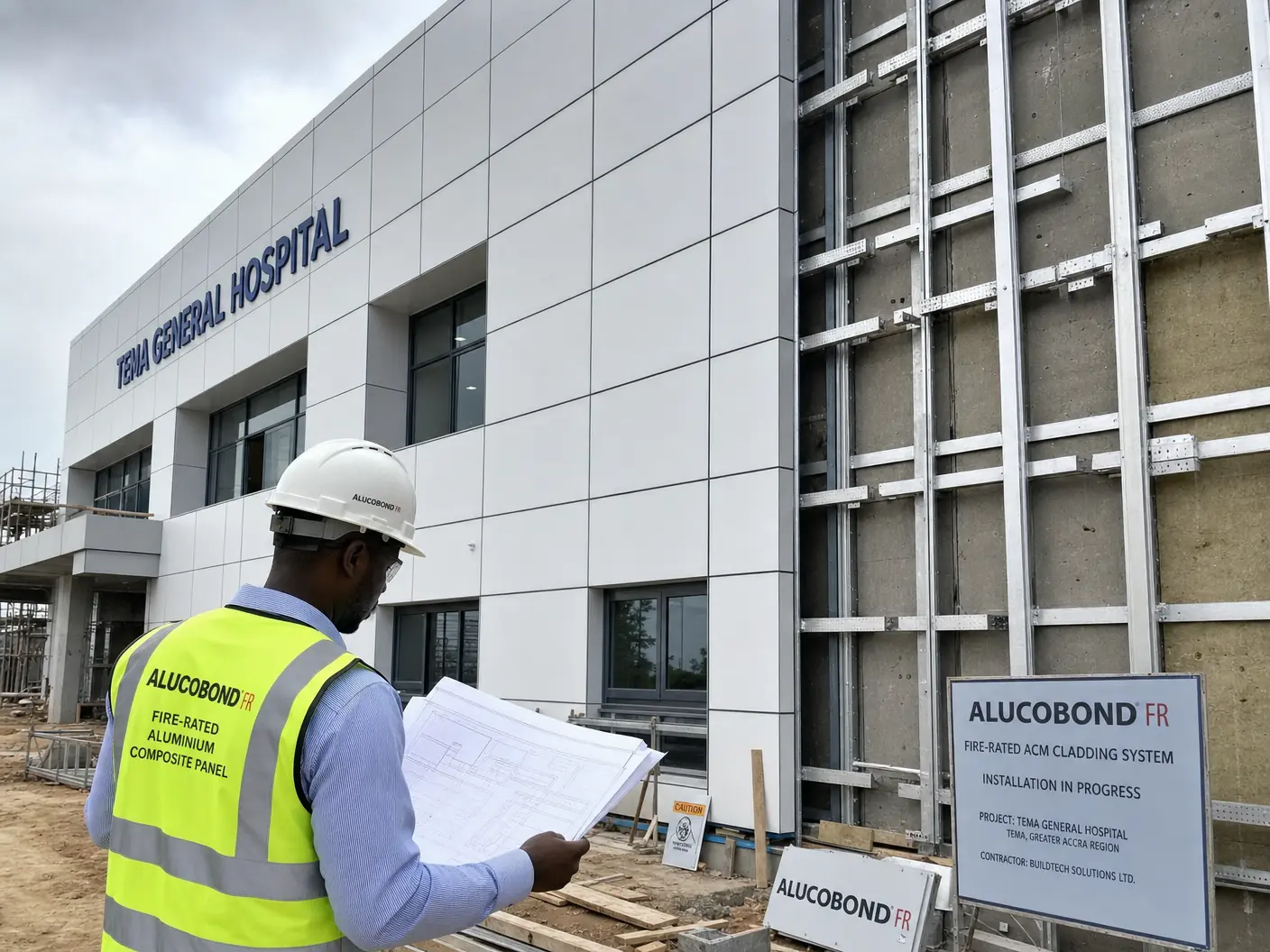
Over 90% mineral filler. Classified A2-s1,d0 under EN 13501-1 — limited combustibility, limited smoke (s1), no flaming droplets (d0). The highest fire rating an ACP achieves, and the right specification for high-rise, hospitals, and institutional buildings.
The Three Cores Compared
| Core | Composition | Fire behaviour | EN 13501-1 (typical) | Specify for |
|---|---|---|---|---|
| PE | 100% polyethylene | Combustible (Grenfell core) | Fails A2 | Not for tall/occupied façades |
| FR | ~70% mineral filler | Fire-retardant | B-s1,d0 (typ.) | Mid-rise where B-class permitted |
| A2 | >90% mineral filler | Limited combustibility | A2-s1,d0 | High-rise, hospitals, institutional |
(Classifications are typical; the actual class is per the specific panel’s certification, which we provide in writing.)
The Real Fire & Performance Standards
- EN 13501-1 — European reaction-to-fire classification (Euroclass A1, A2, B… with s = smoke and d = droplet sub-classes); A2-s1,d0 is the target for non-combustible ACP
- ASTM E84 — surface-burning (“Steiner tunnel”) test giving Flame Spread and Smoke Developed indices
- BS 8414 + BR 135 — full-scale façade fire test (BS 8414) against the pass/fail criteria (BR 135); post-Grenfell tests showed unmodified PE-core ACM fails and mineral-filler ACM passes
- NFPA 285 — US full-scale test for exterior walls containing combustible components
- Coatings — PVDF, PE or FEVE finish, specified for weathering and colour retention (separate from the fire question)
How We Specify a Fire-Safe Façade
- Establish the fire requirement — height, use, occupancy → the reaction-to-fire class the façade must meet.
- Specify the core and document it — PE/FR/A2 + EN 13501-1 class + coating written into the spec.
- Engineer the system — sub-frame, cavity, fire barriers/cavity stops, fixings as a system.
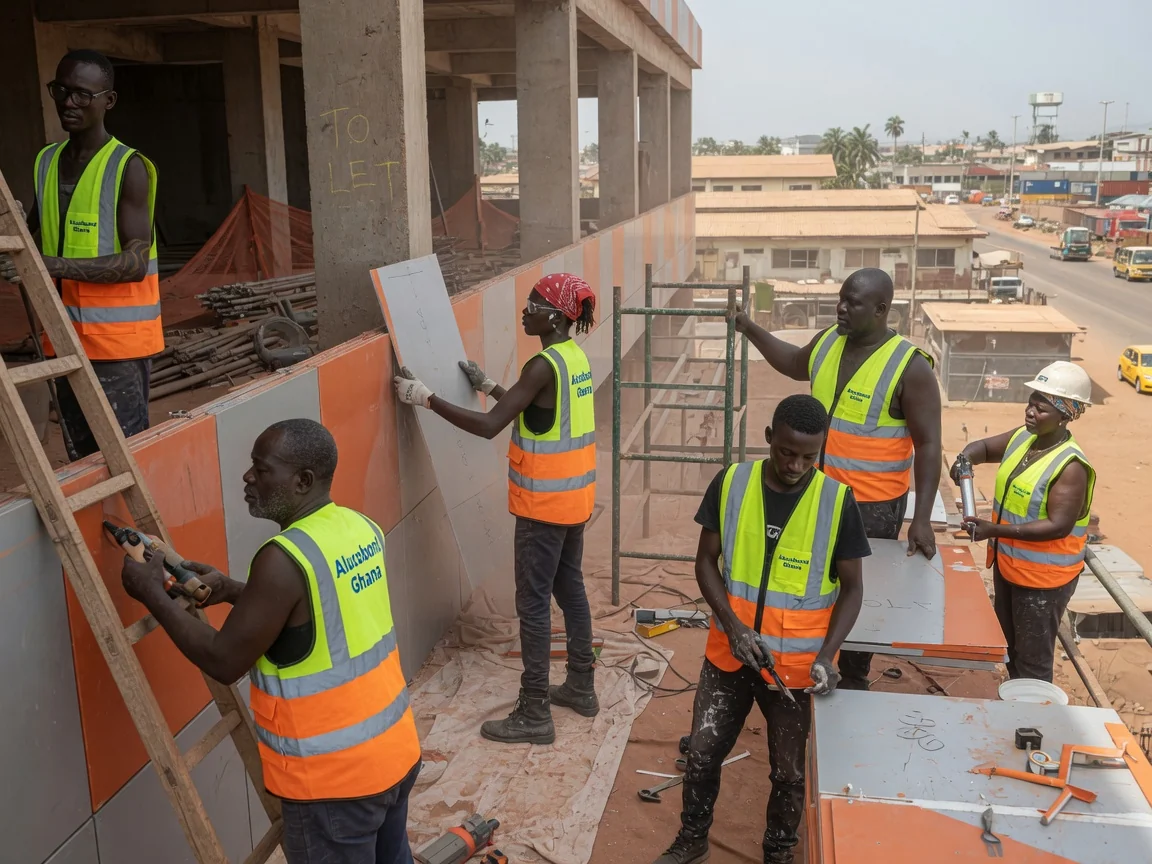
- Install, inspect & hand over the paper trail — panel data sheets + fire classification handed to the owner.
What Affects the Cost
- The core specified (PE vs FR vs A2 — the fire-rated cores cost more, and are worth it where required)
- Panel thickness (3–6mm), coating (PVDF/PE/FEVE), alloy and finish (anodised, RAL/Pantone)
- The sub-frame, cavity detailing, and fire barriers
- Area, building height, and access
Fire-rated façade work is quoted on survey — the panel grade, height, and access decide the figure. Indicative material references and the full cost picture are on the ACP Cladding Cost Guide.
Applications Across Ghana
- Hospitals and healthcare façades (Tema, Accra) where A2 non-combustibility is specified
- Bank and corporate HQ towers in Airport City, Ridge, and the CBD
- Hotels, malls, and high-occupancy buildings
- Re-cladding and façade refurbishment replacing combustible PE panels
Areas We Serve
Alucobond Ghana specifies and installs fire-rated ACP façades across Greater Accra — Airport City, Ridge, Cantonments, the CBD, Tema, East Legon, and Spintex.
Related Services
- ACP Cladding Cost Guide — GH₵/US$/CFA, material vs installed
- Commercial ACP Cladding — corporate tower façades
- Rain-Screen Systems — ventilated ACP façades
- Retrofit & Re-Cladding — replacing combustible panels
Frequently Asked Questions
Is Alucobond / ACP fire-rated? It depends entirely on the core. A PE (polyethylene) core is combustible (the Grenfell material); an FR core (~70% mineral filler) burns far less; an A2 core (>90% mineral filler) is classified A2-s1,d0 (limited combustibility) under EN 13501-1. “Fire-rated” is only meaningful when the core and its Euroclass are named.
What is the difference between PE, FR and A2 ACP cores? PE is combustible and not appropriate for tall/occupied façades; FR is fire-retardant (typically B-class); A2 is limited-combustibility (A2-s1,d0), the highest ACP rating, for high-rise, hospitals and institutional buildings.
How do I know what core my contractor is using? Ask for the panel data sheet and the EN 13501-1 classification in writing before work starts. We name the core and fire class in the specification and hand over the evidence at completion.
Which fire standards actually apply to a façade? Panel reaction-to-fire is classified to EN 13501-1 (tested by methods like ASTM E84); the whole system can be assessed by BS 8414 against BR 135, or NFPA 285. We specify and document against the standard relevant to the project.