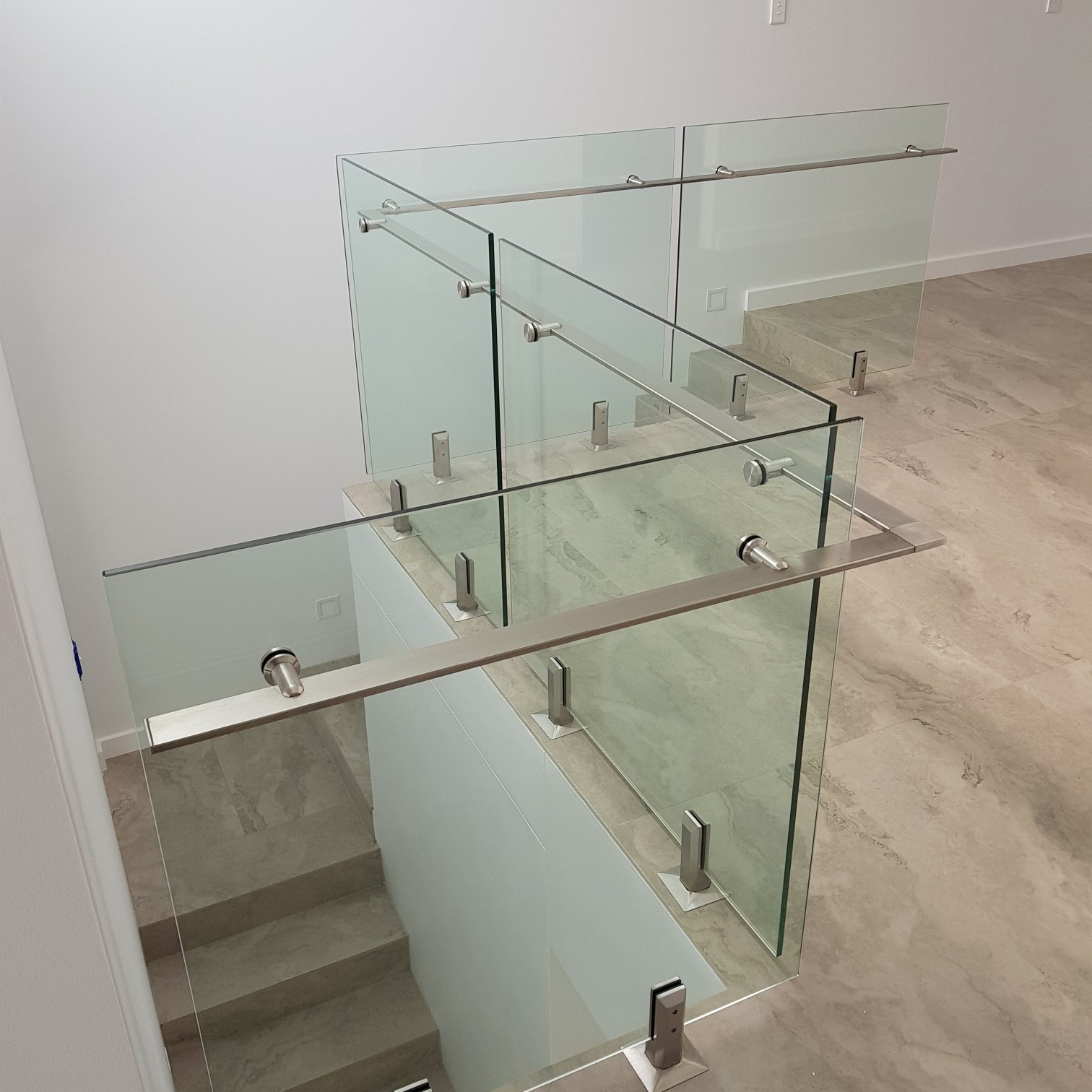
Glass balustrades have become one of the most sought-after architectural features in Ghana's luxury residential and commercial buildings. From the sweeping staircases of East Legon villas to the mezzanine levels of Accra's premium offices and the pool edges of Trasacco residences — frameless glass balustrades create a sense of space, light and luxury that no other balustrade material can match. This guide covers everything you need to know about glass balustrades in Ghana.
Types of Glass Balustrade Systems
Frameless Glass Balustrades
The most visually dramatic option — glass panels with no visible frame, held in place by a bottom channel or by point fixings. Frameless systems create the impression that the glass is floating, maximising the sense of space and light. They are the premium choice for luxury residential and commercial applications in Ghana.
Semi-Frameless Glass Balustrades
Glass panels with minimal framing — typically stainless steel or aluminium posts at intervals with a top rail. Semi-frameless systems offer a balance between the clean aesthetic of frameless and the structural simplicity of fully framed systems. They are popular for commercial applications where cost is a consideration.
Fully Framed Glass Balustrades
Glass panels within a complete aluminium or stainless steel frame. Fully framed systems are the most cost-effective option and are suitable for applications where the glass is primarily a safety barrier rather than a design feature.
Glass Specification for Balustrades
Safety glass specification is critical for balustrades — this is not an area where cost savings should be sought. The glass used in balustrades must be:
- Toughened (tempered) glass: Heat-treated to be 4–5 times stronger than standard glass. When it breaks, it shatters into small, relatively harmless fragments rather than large dangerous shards.
- Laminated glass: Two or more glass panes bonded with a PVB interlayer. When broken, the interlayer holds the fragments together — preventing the glass from falling away. Laminated glass is required for overhead applications and strongly recommended for balustrades where a fall risk exists.
- Toughened laminated glass: The gold standard for balustrades — combining the strength of toughened glass with the safety of lamination. Required for all balustrades in international safety standards.
Alucobond Ghana specifies toughened laminated glass for all balustrade installations as standard. We do not use standard glass or toughened-only glass for balustrade applications.
Applications for Glass Balustrades in Ghana
- Staircases: The most common application — glass panels alongside staircase flights create a sense of space and allow light to penetrate through the staircase.
- Mezzanine levels: Glass balustrades on mezzanine floors allow views between levels and maintain a sense of openness in double-height spaces.
- Balconies and terraces: Glass balustrades on balconies and terraces preserve views while providing safety — particularly popular in Ghana's residential developments.
- Pool edges: Glass pool fencing creates a safety barrier around swimming pools while preserving the view of the pool from the house.
- Shopfronts: Low glass balustrades at the front of retail premises create a visual boundary without blocking the view of merchandise.
Glass Balustrade Costs in Ghana
Glass balustrade costs in Ghana depend on the system type, glass specification and installation complexity. As a guide:
- Fully framed glass balustrade: GHS 600 – GHS 1,000 per linear metre installed
- Semi-frameless glass balustrade: GHS 900 – GHS 1,500 per linear metre installed
- Frameless channel-fixed glass balustrade: GHS 1,200 – GHS 2,000 per linear metre installed
- Frameless point-fixed glass balustrade: GHS 1,800 – GHS 3,000 per linear metre installed
Contact Alucobond Ghana for a free site visit and detailed quotation for your specific project.
Maintenance of Glass Balustrades in Ghana
Glass balustrades in Ghana require minimal maintenance — primarily regular cleaning to remove dust, fingerprints and Ghana's harmattan dust. We recommend cleaning with a soft cloth and mild glass cleaner. Avoid abrasive cleaners that can scratch the glass surface. Stainless steel and aluminium fittings should be wiped down periodically with a damp cloth to remove salt deposits in coastal locations.
Ready to Start Your Project?
Free site survey · Detailed quote in GHS within 24 hours · Written guarantee on every installation
Get Free Quote →