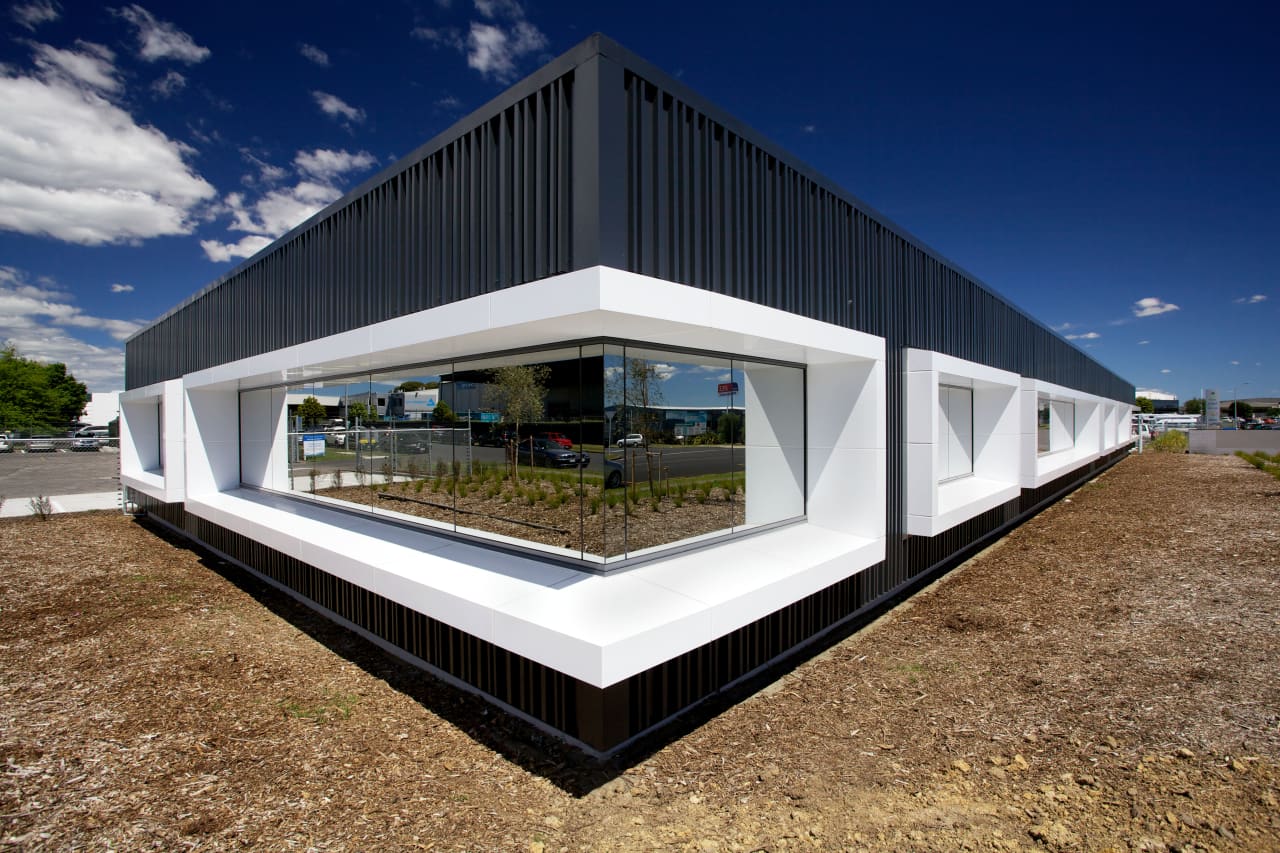
Ghana's architectural scene is evolving rapidly. The buildings going up in Accra's Airport City, East Legon and the Accra Business District today look dramatically different from those built just five years ago — and the facade materials and systems being specified are at the heart of that transformation. Here is our analysis of the key building facade trends shaping Ghana's construction sector in 2024.
Trend 1: Dark and Dramatic Colour Palettes
For years, Alucobond composite panel cladding in Ghana was dominated by silver, white and light grey — the safe, corporate choices. In 2024, we are seeing a significant shift towards darker, more dramatic colour palettes. Deep charcoal, anthracite, dark bronze and even black Alucobond panels are increasingly specified for commercial buildings in Ghana's premium locations.
This trend reflects a broader shift in global architecture towards buildings that make a bold visual statement rather than blending into the streetscape. Ghana's architects and developers are increasingly confident in specifying dramatic colours — and the results are striking.
Trend 2: Mixed Material Facades
The most sophisticated facades in Ghana in 2024 combine multiple materials — typically Alucobond composite panels with curtain wall glazing, laser cut screens and architectural aluminium features. This mixed-material approach creates facades with depth, texture and visual interest that single-material cladding cannot achieve.
A typical mixed-material facade might combine silver Alucobond panels for the main wall areas, full-height curtain wall glazing for the upper floors, and laser cut decorative screens for the lower levels or car park areas. The combination creates a building that is visually complex and architecturally sophisticated.
Trend 3: Perforated and Laser Cut Screens
Laser cut and perforated metal screens are one of the fastest-growing facade elements in Ghana's construction sector. These screens — which can be cut in any pattern from geometric to organic — serve multiple functions: privacy, solar shading, ventilation and visual interest. They are particularly popular for car park facades, balcony screens and feature elements on commercial buildings.
The growing availability of laser cutting technology in Ghana has made custom-pattern screens more accessible than ever. Architects are now designing screens with patterns that reference Ghanaian cultural motifs, brand identities and architectural concepts — creating facades with genuine local identity.
Trend 4: Biophilic Facade Elements
Biophilic design — incorporating natural elements into the built environment — is influencing Ghana's facade design in 2024. This manifests in facade choices including wood-effect Alucobond panels (which provide the aesthetic of timber without the maintenance challenges), green wall systems integrated with aluminium framing, and natural stone effect composite panels.
The appeal of biophilic facades in Ghana is partly aesthetic and partly practical — the visual warmth of natural materials is highly desirable, but the maintenance demands of real timber or stone in Ghana's climate are prohibitive. Composite materials that replicate natural aesthetics with zero maintenance are the ideal solution.
Trend 5: Energy-Efficient Glazing
As Ghana's commercial property market matures and energy costs become a more significant consideration, architects and developers are increasingly specifying energy-efficient glazing systems. Solar-control glass (low-E coatings), thermally broken curtain wall profiles and double-glazed units are all growing in specification frequency.
The business case for energy-efficient glazing in Ghana is compelling: the energy savings from reduced air conditioning load typically recover the premium cost of solar-control glass within 2–3 years. As electricity costs in Ghana continue to rise, this payback period is shortening.
Trend 6: Total Building Envelope Contracts
A growing number of Ghana's developers and main contractors are moving towards total building envelope contracts — engaging a single specialist to design, supply and install the complete external skin of a building. This approach eliminates the coordination problems and quality inconsistencies that arise when multiple contractors handle different elements of the facade.
Alucobond Ghana is one of very few companies in Ghana capable of delivering a complete building envelope — cladding, curtain wall, windows, doors and roofing — under a single contract. Contact us to discuss your project requirements.
Ready to Start Your Project?
Free site survey · Detailed quote in GHS within 24 hours · Written guarantee on every installation
Get Free Quote →