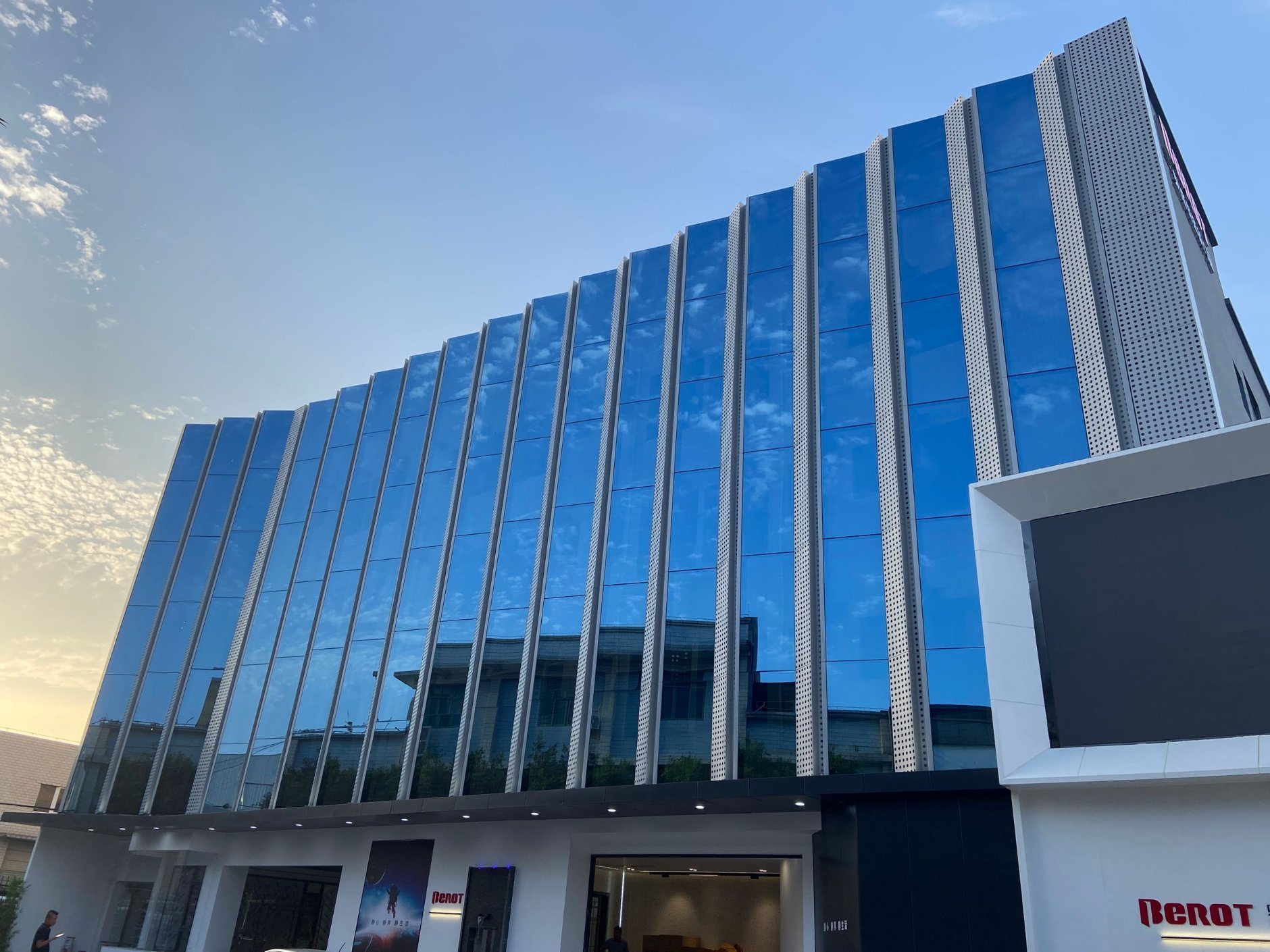
One of the most common questions we receive from architects, developers and property owners in Ghana is: "Should I use a curtain wall system or Alucobond cladding for my building?" The answer depends on several factors — the type of building, the desired aesthetic, the budget and the performance requirements.
In this article, we explain the key differences between curtain wall systems and Alucobond cladding, and help you decide which is right for your project.
What is a Curtain Wall System?
A curtain wall is a non-structural external wall system that hangs from the building's structural frame. It does not carry any structural load — its only function is to keep the weather out and provide an aesthetic facade. Curtain walls are typically made from aluminium framing with glass infill panels, although they can also incorporate Alucobond or other solid panels.
Curtain wall systems are the defining feature of modern commercial high-rise buildings — the glass towers you see in Airport City, Cantonments and Accra's central business district are almost all clad in curtain wall systems.
What is Alucobond Cladding?
Alucobond cladding involves fixing aluminium composite panels to the external walls of a building. Unlike curtain wall, Alucobond cladding is applied over an existing wall structure — it is a rainscreen cladding system that protects the wall and provides an attractive external finish.
Alucobond cladding is used on all types of buildings — from residential homes to commercial offices to industrial warehouses. It is more versatile than curtain wall and can be applied to virtually any building type.
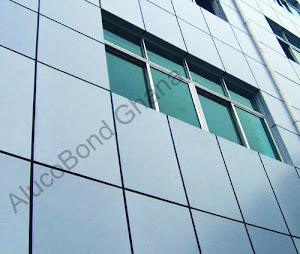
Key Differences: Curtain Wall vs Alucobond Cladding
- Structure: Curtain wall hangs from the structural frame; Alucobond cladding is fixed to the external wall surface.
- Transparency: Curtain wall typically incorporates large glass panels for a transparent, light-filled appearance; Alucobond cladding is solid and opaque.
- Cost: Curtain wall systems are generally more expensive than Alucobond cladding due to the complexity of the framing system and glass.
- Application: Curtain wall is primarily used on commercial high-rise buildings; Alucobond cladding is used on all building types.
- Thermal performance: Modern curtain wall systems with double or triple glazing can provide excellent thermal performance; Alucobond cladding with insulation also performs well.
"For commercial high-rise buildings where a glass facade is desired, curtain wall is the right choice. For most other buildings — residential, commercial low-rise, industrial — Alucobond cladding offers better value and greater design flexibility." — Alucobond Ghana Technical Team
Which Should You Choose?
Choose a curtain wall system if: your building is a commercial high-rise, you want a predominantly glass facade, maximum natural light is a priority, and budget is not the primary constraint.
Choose Alucobond cladding if: your building is residential, low-rise commercial or industrial, you want a solid coloured facade, you need a cost-effective solution, or you are retrofitting an existing building.
Not Sure Which System is Right for Your Building?
Our technical team will advise you on the best solution for your project — free of charge.
Get Expert Advice →