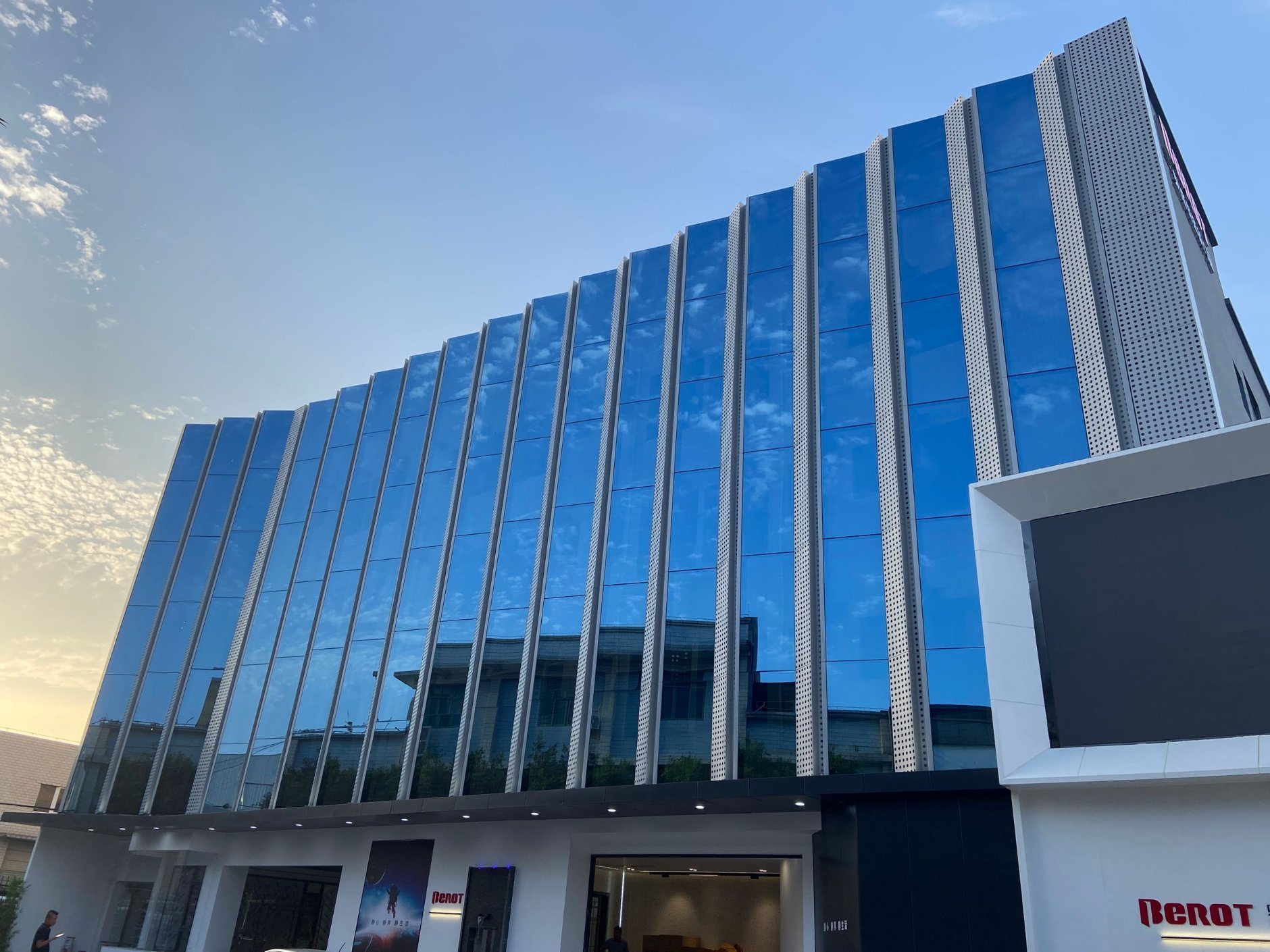
Curtain wall systems are transforming Ghana's commercial architecture. The gleaming glass and aluminium facades of Accra's Airport City, the Accra Business District and Kumasi's commercial centres are almost all curtain wall systems — and their popularity is growing rapidly as Ghana's construction sector matures and developers demand increasingly sophisticated building envelopes. This guide explains everything architects, developers and building owners need to know about curtain wall systems in Ghana.
What Is a Curtain Wall System?
A curtain wall is a non-structural external building skin — typically an aluminium framework with glass infill panels — that is hung from the building's structural frame rather than carrying any of the building's load. The term "curtain" refers to the fact that the facade hangs like a curtain from the structure, rather than being a load-bearing wall.
This distinction from a load-bearing wall is important: because the curtain wall carries no structural load, it can be made almost entirely of glass, creating the floor-to-ceiling glazed facades that characterise modern commercial architecture. The aluminium framing provides the structural support for the glass panels and the weathertight sealing system that keeps Ghana's rain outside.
Types of Curtain Wall Systems
There are three main types of curtain wall systems used in Ghana's commercial buildings:
Stick-Built Curtain Wall
The most common type in Ghana — individual aluminium mullions (vertical members) and transoms (horizontal members) are installed on site, then glass panels are inserted. Stick-built systems are flexible and cost-effective for low to mid-rise buildings. They are the standard specification for most commercial buildings in Ghana up to about 8 storeys.
Unitised Curtain Wall
Factory-assembled panels — each containing a complete unit of frame and glass — are delivered to site and hung from the structure. Unitised systems are faster to install (important for high-rise buildings where scaffold time is expensive), more consistent in quality, and better suited to very tall buildings. They are increasingly specified for Ghana's high-rise developments.
Structural Silicone Glazing (SSG)
Glass panels are bonded directly to the aluminium frame using structural silicone adhesive — creating a frameless glass facade appearance with no visible aluminium on the exterior. SSG systems are the most visually dramatic curtain wall type and are specified for Ghana's most prestigious commercial buildings.
Curtain Wall Performance in Ghana's Climate
Ghana's tropical climate creates specific performance demands for curtain wall systems that must be addressed at the design stage:
- Thermal expansion: Ghana's temperature range from harmattan cool nights to intense midday sun creates significant thermal movement in aluminium frames. Curtain wall systems must incorporate expansion joints and flexible sealants to accommodate this movement without cracking or leaking.
- Solar heat gain: Ghana's intense equatorial sun creates significant solar heat gain through glass — a major energy cost for air-conditioned commercial buildings. Solar-control glass coatings (low-E glass) are essential for any air-conditioned building in Ghana.
- Rainfall intensity: Ghana's wet season delivers extremely high rainfall intensities. Curtain wall drainage systems must be designed for these intensities — pressure-equalised systems with adequate drainage channels are essential.
- Coastal salt air: Buildings in coastal Accra, Tema, Cape Coast and Takoradi require marine-grade aluminium alloys and sealants resistant to salt air corrosion.
Curtain Wall Costs in Ghana
Curtain wall costs in Ghana vary significantly based on the system type, glass specification and building complexity. As a guide:
- Standard stick-built curtain wall with clear glass: GHS 1,500 – GHS 2,500 per m²
- Stick-built with solar-control glass: GHS 2,000 – GHS 3,200 per m²
- Unitised curtain wall systems: GHS 2,800 – GHS 4,500 per m²
- Structural silicone glazing (SSG): GHS 3,500 – GHS 5,500 per m²
These are indicative ranges — actual costs depend on building height, accessibility, glass specification, frame colour and project complexity. Contact Alucobond Ghana for a detailed quotation for your specific project.
Specifying Curtain Walls for Ghana Buildings
For architects and developers specifying curtain wall systems for Ghana projects, the following points are critical:
- Always specify solar-control (low-E) glass for any air-conditioned building — the energy savings justify the premium cost within 2–3 years
- Specify thermally broken aluminium profiles for air-conditioned buildings — standard profiles create thermal bridges that significantly increase cooling loads
- Require pressure-equalised drainage design — not just drainage channels, but a properly pressure-equalised system that prevents water ingress under wind pressure
- Require structural engineering sign-off on the fixing system — the connection between the curtain wall frame and the building structure is critical
- Specify a written guarantee from the installer — at least 5 years on workmanship, 10 years on materials
Alucobond Ghana's technical team can assist architects and developers with curtain wall specification for Ghana projects. Contact us for technical support and detailed quotations.
Ready to Start Your Project?
Free site survey · Detailed quote in GHS within 24 hours · Written guarantee on every installation
Get Free Quote →