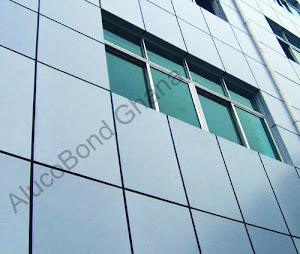
Alucobond composite panel cladding has transformed Ghana's architectural landscape over the past decade. Walk through Airport City, East Legon or the Accra Business District and you will see the gleaming, colourful facades of buildings clad in Alucobond aluminium composite material (ACM) panels — the material that has become synonymous with modern Ghanaian architecture. But what exactly is Alucobond, why is it so popular in Ghana, and what do you need to know before specifying it for your building project?
What Is Alucobond Composite Panel Cladding?
Alucobond is the original aluminium composite material (ACM) panel — a product consisting of two thin aluminium skins bonded to a mineral-filled polyethylene core. The result is a panel that is exceptionally rigid for its weight, flat and smooth to an extremely high tolerance, and available in a vast range of colours and finishes. Alucobond was invented in Germany in the 1960s and is now manufactured by Mitsubishi Chemicals and their licensed partners worldwide.
The key properties that make Alucobond ideal for building cladding are its combination of rigidity, lightness, flatness and weather resistance. A standard 4mm Alucobond panel weighs only 5.5 kg/m² — compared to 25 kg/m² for a 10mm stone cladding panel. This lightweight characteristic reduces the structural load on the building and makes installation faster and more cost-effective.
Why Is Alucobond So Popular in Ghana?
Ghana's construction sector has embraced Alucobond composite panel cladding for several compelling reasons that are specific to Ghana's climate and construction environment:
- Weather resistance: Ghana's tropical climate — intense UV radiation, heavy wet season rainfall, coastal humidity and harmattan dust — creates extremely challenging conditions for building materials. Alucobond's PVDF (polyvinylidene fluoride) coatings are specifically formulated to resist UV degradation, colour fading, and moisture penetration in tropical conditions.
- Low maintenance: Unlike painted concrete or rendered walls that require repainting every few years in Ghana's climate, Alucobond cladding requires only periodic cleaning. The smooth, non-porous surface resists dirt adhesion and is easily cleaned with water.
- Design flexibility: Alucobond is available in over 100 standard colours plus custom RAL options, and can be fabricated into flat panels, curved panels, perforated panels and complex 3D shapes. This design flexibility has made it the material of choice for Ghana's most ambitious architectural projects.
- Speed of installation: Alucobond cladding systems are significantly faster to install than traditional masonry or concrete cladding — an important advantage in Ghana's fast-moving construction sector.
Types of Alucobond Panels Available in Ghana
Alucobond panels are available in several core types, each with specific performance characteristics:
- Alucobond Standard: The original product with a polyethylene core — the most widely used type in Ghana for standard commercial and residential cladding applications.
- Alucobond A2 (Fire-Rated): A mineral-filled core that meets the highest fire safety standards (A2 non-combustible classification). Required for buildings above a certain height in many international building codes and increasingly specified for Ghana's institutional and commercial buildings.
- Alucobond Plus: Enhanced fire performance with a fire-retardant core — a middle ground between Standard and A2.
- Alucobond Spectra: Special effect coatings — metallic, iridescent and colour-shifting finishes for premium architectural applications.
How Is Alucobond Cladding Installed?
Professional Alucobond cladding installation follows a systematic process:
- Substrate survey: The existing wall or structure is surveyed for flatness, structural integrity and fixing capacity. Any remedial work is carried out before cladding begins.
- Frame design and installation: An aluminium sub-frame is designed and installed to provide a flat, true surface for the cladding panels regardless of the substrate condition. The frame also provides the drainage cavity that is essential for weathertight performance.
- Panel fabrication: Panels are cut, routed and folded in the workshop to the exact dimensions required for each location on the building. Routing creates the fold lines for returns and edges.
- Panel installation: Panels are fixed to the sub-frame using concealed or visible fixing systems. Concealed systems give a cleaner appearance; visible systems are faster to install.
- Sealing and finishing: Joints between panels are sealed with high-performance silicone sealants. Perimeter details, corners and flashings are completed.
How Much Does Alucobond Cladding Cost in Ghana?
Alucobond panel cladding costs in Ghana typically range from GHS 450 to GHS 1,200 per square metre installed, depending on the panel specification, design complexity, building height and accessibility. The wide range reflects the significant variation between a simple flat-panel installation on a single-storey building and a complex curved or perforated panel installation on a high-rise.
The cost of Alucobond cladding should always be evaluated against its lifetime cost — not just the initial installation cost. When you factor in the zero maintenance requirement, the long service life (30+ years for quality installations) and the property value uplift, Alucobond cladding delivers exceptional value compared to alternatives that require regular repainting and eventual replacement.
Choosing the Right Alucobond Installer in Ghana
The quality of an Alucobond installation depends critically on the expertise of the installer. Key factors to consider when choosing an Alucobond installer in Ghana include:
- Experience with Alucobond specifically — not just general metalwork or construction
- In-house fabrication capability — panels should be fabricated to precise dimensions, not cut on site with basic tools
- Structural frame design capability — the sub-frame is as important as the panels themselves
- Written guarantee on both materials and workmanship
- A portfolio of completed projects you can visit or verify
Alucobond Ghana has been installing Alucobond composite panel cladding since 2009 — over 15 years of dedicated experience with this specific product in Ghana's specific conditions. Contact us for a free site visit and detailed quotation.
Ready to Start Your Project?
Free site survey · Detailed quote in GHS within 24 hours · Written guarantee on every installation
Get Free Quote →